Wednesday, March 19, 2014

Readers or Viewers


Recently I read somewhere an interesting article about readers and non-readers.  The distinction was not between literates and illiterates—that is, between people capable or incapable of reading—but between those who do and those who don’t read books. 

            Of the latter  (“non-readers”) there was what was for me a surprisingly large number, and it was growing.  There are quite a few people who do not read a single book in a year, and some who do not read a book for years on end.  The non-readers tend to watch videos and stuff.   I hope that I myself am living proof that it is possible both to read books and to watch videos and stuff.  The author’s focus was the possible correlation of reading books with social class.  Sociology can be full of surprises, but not this time.  People who read books are on the whole better educated, more financially secure, and of “higher status” than those who do not.  The issue of relating correlation and causation, which is always vexing in such “studies,” was probably insuperable here, and I don’t believe it was touched upon.   But it does seem to me intuitively correct, not to say obvious, that people who are better off materially are likely also to be better in that all-important branch of spiritual life that is the fruit of serious, habitual reading.

            Something interesting happened, though, when I decided that I would like to revisit the article preparatory to writing a blog essay of my own.  I could not find it.  I could not in the first place remember whether I had read it in print or on-line.  When I Binged it—and I consider Binging of higher social status than Googling—I found dozens if not hundreds of items so similar that I was unable to identify the particular piece.  The irony did not escape me: I was foiled in my research into changing reading habits by my changed reading habits.

            These findings would discourage me, did they not contradict others in which I have more confidence—those of my own Subway Test.  (The test actually includes buses as well, though trains and planes require a special metric.)  Unusual personal circumstances determined that I became familiar with the London Underground and the Paris Métro well before I knew much about the New York Subway.  When my children moved to New York, however, which was quite a while ago now, I became an occasional subterranean traveler myself.  What I noticed early on was that in London about one in three straphangers would be reading a book—usually a distinctive orange and white Penguin paperback, suggesting intellectual quality.  London r[ea/i]ders are not merely numerous but above average in erudition.   (I once sat next to someone reading the Elementary Turkish Grammar edited by my friend and colleague Norman Itzkowitz.  It was all I could do to restrain myself from telling the guy, but it was way too unBritish.)  In Paris there would be a couple of readers in any half-full car, and everybody knows that all French books ooze intellectuality.  In New York the subway reader was much rarer.           
           
            Things could be worse, mind you.  My experience with public buses in Italy, although limited, has left me with the firm opinion that Italian bus-riders are not book readers.  I only ever saw one reader reading one book: Sesso nel confessionale.  This was a scandalous book of the moment, written by a blasphemous journalist who went around various churches making inventive confessions of imaginary sexual sins and then reporting the wildly differing penances imposed.  If you think our drug laws are incoherent….but I digress.

            Over the past couple of decades the evidence for American literacy has been, let us say, ambiguous.  If I judge things from the perspective of my royalty statements, there is little room for hope.  On the other hand, when I judge by the Subway Test, books seem to be making a strong comeback.  One sees quite a few book-readers, especially if you take an optimistic attitude to riders holding electronic tablets.  Most other people are reading something on their tiny telephone screens.  Almost everybody under sixty is sporting ear buds, and it is at least remotelyi possible that the guy with the closed eyes and the rhythmically nodding head is grocking on Jane Austen on Audible rather than Chet Atkins on acoustic guitar.

            Indeed I am beginning to believe that the much-maligned hand-held device may prove a stimulus to authors of serious books.  At the moment e-book publishers are trying hard to make the pixiled page look ever more like the printed one, but that may change.  My brainy granddaughter Sophia, who is studying brain science with other brainiacs at Johns Hopkins, just introduced me to what may be the Next Big Thing in readings: Spritzing.  If you check it out you will immediately grasp both the potential and the infuriation.  You will probably also agree that although people occasionally survive simultaneous texting and driving, things are unlikely to work out so well with Spritzing.


Wednesday, March 12, 2014

Lady Anne Finds Her Match


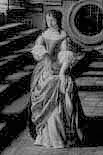
Lady Anne Conway, about 1660, a detail from the domestic portrait by Samuel van Hoogstraaten

I suppose that most scholars of literature, and many historians, have shared a disconcerting realization of the large spiritual gap separating them from the objects of their study and admiration.  How can anybody write about Shakespeare, for example, without feelings either of inadequacy or of fraud?  How could any academic essay on King Lear actually enlarge King Lear?  I spent a lot of time teaching Chaucer to undergraduates, and writing about him for the scholarly press without ever getting in hailing distance of the man’s geniality or the scope of his genius.  Just very occasionally, however, one encounters something approaching a just symbiosis of the writer and the object of the writing—in Einhard’s Life of Charlemagne, perhaps, or in the fourth gospel.

            When I was writing my most recent book I encountered a fine example of this happy phenomenon relating to Valentine Greatrakes, the “Stroker”, a faith healer who baffled some of the great minds of the early Enlightenment in England.  It was then that there came into my hands a big octavo entitled Conway Letters: the Correspondence of Anne, Vicountess Conway, Henry More, and Their Friends, 1642-1684, edited by Marjorie Hope Nicolson (New Haven, 1930).*

            Anne Finch, the daughter of Sir Heneage Finch, who for a time in the reign of Charles I was the Speaker of the House of Commons, was born in 1631.  At the age of twenty she married Edward Conway, later Earl of Conway, the heir to an imposing country house, Ragley, in Warwickshire.  From the intellectual point of view Lord and Lady Conway were one of the premier power couples of her age, or any other I suspect.  Lord Conway amassed at Ragley an imposing scholarly library.  It was still a time when a voracious scholar could hope to be familiar with almost every important book issuing from the press, and his book agents scoured the bookshops of the Continent for new works in every field of learning.

            Yet in this close and loving marriage the distaff was mightier than the spade.  At a time when women were subordinated in all walks of life, excluded from the universities and the professions, disabled by custom and by law, Anne Conway has to be reckoned one of the great intellectuals of her day.  Latin, Greek, and Hebrew she mastered at a high level.  Wholly on the basis of recognized ability she was accepted as a private pupil by Henry More , the Cambridge Platonist, who judged her the ablest interpreter of the philosophy of Descartes he had ever met.  More and other famous scholars and philosophers like Ralph Cudworth made of the Ragley dining room a kind of running salon of virtuosity.

            Many of the familiar letters that passed among this elite group were used by their less impressive posterity to kindle fires or polish furniture!  By extraordinary good fortune, however, a substantial number  were preserved in a great wooden chest, eventually falling into the rescuing hands of Horace Walpole, a man who knew a thing or two about letter-writing and the value of letters.

            Only in the twentieth century, however, did they get their due when Marjorie Hope Nicolson took them up as a scholarly project.  In Professor Nicolson Lady Anne Conway found her match, or at least her modern analogue.  Nicolson (1894-1981) was a brilliant scholar of seventeenth- and eighteenth-century English literature who, like Conway, was a bold pioneer in what in the upper echelons of American higher education was still pretty much a man’s world.   Her list of “first woman to…” is impressive.  She was the first woman to take a doctoral degree in literature at Yale—which she did in two years--the first woman to teach on the graduate faculty of an Ivy League institution (Columbia), the first woman President of Phi Beta Kappa, the first woman president of the Modern Language Association.  She declined the invitation to become the first woman president of Smith, where she had served as a distinguished professor and dean.
Marjorie Hope Nicolson in 1930, when she published the Conway Letters

            Her scholarship, too, was pioneering, and revolutionary.  She had a rigorous philosophical mind and a deep knowledge of the history of science.  She was thus perfectly prepared to undertake investigations of the extraordinary impact on the literary imagination of the scientific explosion of the seventeenth century and the later Enlightenment.  There are not a great many books that I myself remember vividly from graduate school in the early sixties, but two of them were by Nicolson: Newton Demands the Muse: Newton’s Opticks and the Eighteenth Century Poets and Science and Imagination.  I met her once, in 1961.  She gave a lecture at Princeton, an institution at which there was not then a single woman student or faculty member.  Yet I remember that one of my heroes, the genial Louis Landa, no slouch of a scholar himself, introduced her as the greatest of living American literary scholars.

            The Conway Letters naturally have of themselves the fascination of bringing to life the rather amazing life and thought of a unique community of English aristocratic and philosophical thinkers three centuries and more ago.  But their organization, edition, and introduction by a modern scholar who lived and breathed the seventeenth century and who wrote with the sparkle of a wizard and the clarity of an angel makes of them something of a modern masterpiece as well.  I think Lady Anne would be most pleased.

*Oxford brought out a renewed edition in 1992.


Wednesday, March 5, 2014

Democracy Downgrade?


Yesterday was slightly exceptional in that I managed to embarrass myself twice before the light of dawn.  I did not begin the day by contemplating something true or beautiful.  Instead I made a bee-line for my computer to seek out the Bank of America website to find out whether my monthly pension check had yet been deposited.  That was embarrassment number one.  Embarrassment number two was the quite real sense of annoyance, indeed grievance, that descended upon me when I discovered that in fact the deposit had not yet been made.

            In it inevitable that the aging process should be accompanied by a certain shortening of horizons, but surely those should be of the flesh, not of the spirit.  As a youngster I was aware of several local “seniors”—not my relatives, I hasten to add-- whose only visible occupation was awaiting their “government check,” as it was called.  How pathetic is that?  But at least they actually needed the money.  Without it they could not get the pickup fixed or renew the supply of Red Man indispensable for keeping their teeth and beard stubble at the proper level of disgustingness.  We are not exactly rolling in dough, but surely we have sufficient resources for a comfortable life without worrying about the months with thirty-one days.

            And I am not awaiting a government check, but a private sector annuity.  I tend not even to think about Social Security payments, which barely cover our property taxes.  But that hasn’t kept me from developing my own incipient case of entitlementitis.   The moment of discouraging self-awareness coincides with our reading of a particularly excellent article in the current issue of The Economist.  Its title is “What’s Gone Wrong with Democracy?”  I commend this essay to all thoughtful citizens.


            I see now that my own analysis of the current American malaise, which I tend to attribute to an obsolescent Constitution, is rather parochial.  This Economist essay taking a broader view, argues that it is world-wide democracy—of which our country is to be sure both the natural and the nominal leader—that is sickly.  It identifies the two precipitating causes of democracy’s malaise in our new century as the financial crisis of 2007-2008 and the rise of China. 

            “The Chinese Communist Party has broken the democratic world’s monopoly on economic progress.”  The failure of classic twentieth-century Communism was economic.  It didn’t work.  But China has shed the economic essence of Communism while keeping its authoritarian and anti-democratic politics, yet simultaneously achieving dramatic economic growth and expanding GNP.  In a world in which village pragmatists considerably outnumber political philosophers it is not clear that the American “democratic model” can claim the advantage of superior practical results.  “China says its model is more efficient than democracy and less susceptible to gridlock.”

            If the essay’s most arresting ideas are those relating to China, it is the discussion of the world-wide financial crisis that is most relevant to my own current mood.  I lived most of my formative youth in a fear of debt that was sort of like the fear of polio.  I didn’t know exactly what it was, but I knew that you absolutely had to avoid it.  Of course I eventually grew up and learned that the way that even some quite sober citizens got their cars and houses and stuff was by buying them with money they didn’t actually have at the moment.  Embracing debt, indeed, seemed to be the essence of “the American way of life” and the necessary path to achievement of “the American dream”.  I eventually got with the program, but always nervously and with as little enthusiasm as was consistent with traveling on an American passport.

            So I thought I understood the financial crisis, sort of—vast numbers of people with huge housing debt and less housing equity, mighty financial institutions coming to me—moi!--rattling their tin cups, that sort of thing.  But here in this Economist article I read what I actually have believed all along: “The financial crisis has starkly exposed the unsustainability of debt-financed democracy.”  It may have exposed it, but so what?  The distinction between democracy and demagoguery is no wide gulf, perhaps nothing more than a lexical finesse.  Political pandering is necessarily a universal temptation of all democratic systems, but American constitutional democracy has developed in such a way as to make of it a controlling principle. 

            It is perhaps unfair that American Congress has apparently reached its nadir of public approval, since we have the Congress we want.  That is what “popularly elected” has to mean, isn’t it?  There is an effective symbiosis between an electorate that demands things it does not want to pay for and elected representatives who can wangle the short-means terms on which they can have them.   Or some of them—and not always the right ones.

            The Economist essay is by no means all doom and gloom.  There is an upbeat final section entitled “Getting Democracy Right.”  Here we find many sensible suggestions and at least plausible paths of reform.  Maybe it is merely my exhaustion before this grinding winter--or the fact that today is Ash Wednesday--that makes me find the gloom and doom part more convincing.

Wednesday, February 26, 2014

Famous Writers I Have Known


 Famous writer James Magnuson, author of Famous Writers I Have Known

From what you read in the papers you might reasonably conclude that the public considers the chief missions of the modern university to be the political corruption of American youth and the financial ruin of their parents.  This blog eschews controversial topics, and I want to stress instead a very positive role played by our institutions of higher education that is perhaps not always sufficiently appreciated: their role as patrons of the arts.  The number of writers, musicians, dramatists, and visual artists who find on our college campuses a professional niche and at least some degree of financial support is very large.  Their contributions to our national cultural capital have been enormous.

            That paragraph is obviously an introduction, but, you might ask, an introduction to what?  Well, to what else than a semi-review of and unembarrassed sales pitch for Famous Writers I Have Known, the latest novel by James Magnuson, the Director of the Mitchener Center for Writers at the University of Texas.  This hilarious romp of a book not merely exemplifies my general principle but takes it up as subject matter.

            The famous writers I myself have known at my institution include Toni Morrison, who was my colleague at the time she won the Nobel Prize for Literature, and Joyce Carol Oates, a colleague who publishes three-hundred-page books at approximately the same rate I publish blog essays.  But the first famous writer I ever knew at Princeton was Jim Magnuson.    Jim and I have been good friends for nearly fifty years, and you may remember his name from previous essays over the years.  Back at the beginning, in the late sixties, Jim was a Hodder Fellow and “playwright in residence” in Wilson College, a quasi-anarchist undergraduate residential college of which I was the alleged master.  Bliss was it in that dawn to be alive, but to be young was very heaven.

            Magnuson’s Famous Writers I Have Known is equal parts crime caper and literary satire.  Advice to young writers usually includes the suggestion that they choose a subject they know something about.  Magnuson is the long-time Director of a prestigious program for writers at the University of Texas in Austin.  The setting for this novel is a prestigious program for writers at a Texas university in someplace rather like Austin.  By no means do I suggest that the novel is “autobiographical”; but I can say that the reader is likely to find the handling of setting highly convincing.

            The “situation” in Famous Writers, which is at least as plausible as that in Sir Gawain and the Green Knight, is as follows.  There is a famous writer who, since publishing a single sensationally successful novel long ago, has lived in almost supernatural obscurity for decades.  (Think, perhaps, for purposes of analogy, of J. D. Salinger circa 1980.)  This man is invited, on a nearly clandestine basis that defers to his mania for privacy, to be a well-paid writer in residence for a term at the Texas writing program.   However, the invitation is intercepted, so to speak, by a New York confidence man of bounteous intellectual invention but limited literary vocabulary.  This man, Frankie Abandonato, the novel’s narrator, has very good reason to want to hide out in the obscurity of an academic institution, since he is on the lam.  The very essence of the criminal cunning of the con man is to seize and exploit fortuitous opportunity, and Frankie somewhat rashly sets out to exploit this one.  He thinks that masquerading as a famous writer need be no more taxing than some of his other charades as a criminal trickster.

            There is both satisfying mystery and teasing suspense in Magnuson’s novel, so I shall say no more, except that the plot is as carefully handled at that of a Stoppard play, and that letters go astray even less frequently than they do in Thomas Hardy.

            Magnuson makes a few gestures to satisfy the stray artsy reader for whom no novel can pass muster without at least a few “themes” and “symbols” and if possible “symbolic themes”.  One good example of Magnusonian wit is to be found in the anti-hero’s name: Abandonato.  In addition to satisfying the requirements of criminal ethnic stereotype, it fits in with the recurrent and quite serious themes of parental abandonment and orphanhood.  (One of Magnuson’s earlier novels, Orphan Train, required him to research in some depth the history of the treatment of orphans in this country.)

            But what makes Famous Writers an engaging comic novel is what will probably be called its “academic satire”.  It is Magnuson’s inside knowledge of academic writing programs that is the book’s greatest structural strength.  He knows how fruitful such programs can be, and how richly they contribute to the American literary scene.  But he also has a lively eye for potential absurdities.  Pretense is not exactly the same thing as pretentiousness, but the two are pretty close together in the dictionary.  At least Frankie Abandonato knows that he is a pretend writer.


Wednesday, February 19, 2014

The Weather Up Here


 Our view to the south

                        Now Sam McGee was from Tennessee, where the cotton blooms and blows.

                        Why he left his home in the South to roam 'round the Pole, God only knows.

                        He was always cold, but the land of gold seemed to hold him like a spell;

                        Though he'd often say in his homely way that "he'd sooner live in hell."
                                     Robert Service, "The Cremation of Sam McGee"

            Tall people are everywhere these days, but when I was a lad there weren’t so many, and I stood out, as the saying goes, among my high school classmates.  They used to greet me with “How’s the weather up there?”  This question must have been quite a striking witticism when first uttered in ancient Ugaritic, but it had sunk into tediousness by the mid twentieth century.  Nonetheless it perhaps contributed to my morbid engagement with meteorological lore.

            I went off to college on a mountain top where impenetrable fog would descend for days at a time.  I continued my education at Oxford where drizzle was the default  setting for daylight hours, which in winter ended about three-thirty in the afternoon.  I suppose there is some advantage to precipitation you can’t actually see.  Eventually I found myself gainfully employed as a junior professor at the University of Wisconsin.

            There were certain winter days in Madison that were classified as “thirty, thirty, thirty”.  The meaning of this was that the thermometer was registering thirty degrees of frost, the wind was blowing at thirty miles an hour, and the life expectancy of an assistant professor left unsheltered on the streets was approximately thirty minutes.  One day early in 1964, after walking through such conditions from my house to the University library in approximately twenty-six minutes, I congratulated myself upon my continuing existence to the librarian lady at the desk.  “Boy,” I said, shaking the ice follicles from my garments, “it’s really fierce out there.”

            “Really?” she replied.  “I don’t pay much attention to the weather.  Which is a pity, seeing that it’s the only thing some people can talk about.”  It was not absolutely clear that this remark was offered as a personal rebuke, but it struck home, since the only people I knew who were duller than those who talked about the weather were those who talked about television serials.

            I could have spent a happy career at the University of Wisconsin except for two things, both unfortunately non-negotiable.  The first was the size of the institution.  It was huge, at least for my spiritual metabolism.  Sometimes I had to take a campus bus from one classroom to another.  The other was the severity of the protracted winter.  When it snowed on Easter Sunday I knew that eventually I would have to move on.

            Opportunity to do so came far more quickly than I could have anticipated, and we moved on to Princeton--where it snowed on the first Easter Sunday of our residence.  Here, at least, the snow was regarded as an aberration worthy of clucking comment in the local freebee press.  I have now lived in this same New Jersey town for almost fifty years, and I have collected much grist for my meteorological mill.  The situation is somewhat confused.  We have a man-made lake, a century-old gift of the philanthropist Andrew Carnegie.  It is fairly long and fairly narrow, and in its suitability as a racing course for rowers it admirably fulfills one of its principal intended purposes.  In my early years in Princeton we often skated on the frozen lake in the winter.  What you need for safe and pleasurable skating is a hard and enduring freeze that is not accompanied or soon followed by snowfall.  We had episodes of such conditions at least once or twice a season practically every year until—until we didn’t.  Then we had many successive years without skating, so many that at some point I no longer felt I was of an age to be skating anyway. 

            I regarded this as valid evidence of at least a local long-term warming trend consistent with the hypothesis of man-made global warming that was becoming a prominent topic in popular discourse over the past three decades.  It was not scientific evidence in a rigorous sense involving carefully recorded and graphed data; but it was scientific in the way of old country folk, whom I have always admired, who base so many of their actions on conclusions drawn from their empirical experience of natural phenomena.

            But we are now in the midst of this winter—if not the winter from Hell, at least the winter from Fargo.  The long-frozen lake lies unskatable beneath successive carpets of thick snow.  I have learned that I can fall on the ice even without the help of skates.  I have done so twice, painfully.  My biceps bulge from shoveling snow.  My bank account shrivels before the demands of the gas company.  That’s how the weather is up here. But what is the meaning of it? 


Wednesday, February 12, 2014

In a Brown Study


When I first encountered the phrase brown study in British authors of the early twentieth century I was ignorant of its meaning but imposed upon it the absurd notion that it must refer to a special room in a man’s house.  Even gross error confidently embraced is not easily dislodged and only later did I come to appreciate the idiom as defined by Brewer.  A brown study is a certain frame of mind, “apparent thought, but real vacuity.  The corresponding French expression explains it—sombre réverie.  Sombre and brun both mean sad, melancholy, gloomy, dull.”           

            I am always uneasy about starting an essay when, as now, I am unsure what it will be about—beyond being the product of a brown study, that is.  It might be a tribute to smart Jewish girls.  It might be a commendation of literary study.  On the other hand it might be of a more conventional, not to say tedious genre—grandparental chortling about cute things their grandchildren say.

            But no essay could be plagued by more “mixed messages” than the recent slice of life it will attempt to report.  About a week ago we learned that a very dear friend, Joanna Lipking, had died in her sleep in Evanston IL on February 1st.  Jo was married to Larry Lipking, my Princeton colleague in the sixties and seventies.  The Flemings and the Lipkings, who were still young, barely, hung out together and formed that bond of friendship that only the youthful can form.  Jo was brilliant, crackling with intellectual energy, and she expressed her strong opinions emphatically.  We were sad when the Lipkings moved on to Northwestern, where both were offered appointments in the English Department.  

            The friendship continued, of course, but in the distant and intermittent mode dictated by geography.  We had all been together fairly recently, when we discussed plans, long agreed upon in principle, to travel together in Sicily.  That, alas, can never happen.  The proposed trip must remain forever an emblem of many things undone and conversations not had.  That is how death works, or one of its ways.

            It will take me a while to wrap my mind around this latest evidence of our common mortality, though as one grows old one also becomes more familiar with the sting.  And if in the midst of life we are in death, it works the other way around, too.  The week before we had been in New York at a brunch to celebrate the eleventh birthday of our delightful granddaughter Lulu.  Lulu is another dark-haired beauty of fierce intelligence, interested in practically everything, and precociously talented in the pursuit of many of them.  She had already had a “real” party of her peers.  This was a ceremonial event mainly populated by her elders, including two of her godparents—two eminent academics, natch.

            Her godmother, who happens to live in the same apartment building, is Catharine (Kate) Stimpson, a prominent professor of modern literature and women’s studies, a novelist, and a past president of the Modern Language Association.  Those are some of the public externals one would find on her vita, to which those who know her even so slightly as I do would have to add achievements considerably more important, such as “fine woman” or “excellent person”.  What does one give an eleven-year-old for her birthday?  What does one give this eleven-year-old?  We had chosen a couple of nice little things for her, but Kate Stimpson gave her a copy of the Complete Poems of Emily Dickinson.

            I shall refrain from launching into an ill-informed encomium of Emily Dickinson, except to say of her short poems what Saint Gregory says about the Bible.  Here is a gentle stream in which the lamb may safely wade; here is a mighty river into which the elephant can plunge.  But I wondered if little Lulu was really “ready”?

            I knew I was.  When I heard the news of Jo Lipking’s death, one of the first things I did was to return to one of Dickinson’s most haunting and enigmatic poems, a poem about death and the “safety” or consecrated indifference of the dead.

                Safe in their Alabaster Chambers -
                Untouched by Morning - 
                and untouched by noon -
                Sleep the meek members of the Resurrection, 
                Rafter of Satin and Roof of Stone - 

                Grand go the Years, 
                In the Crescent above them -           
                Worlds scoop their Arcs - 
                and Firmaments - row -
                Diadems - drop -
                And Doges surrender -
                Soundless as Dots, 
                On a Disk of Snow.

I do not pretend fully to understand this poem, but I don’t know a more striking line in English than “Rafter of Satin and Roof of Stone”.  I believe the final lines—the silent dots on the disk of snow—make technical allusion to telegraphy, the cybernetic wonder of the nineteenth century, but again I am not certain.  Does any of my readers have an idea?

            “The mind is its own place,” as Milton’s Satan famously observed.  The mind is seldom wholly occupied with a single theme.  There is a jostling competition for the mind’s attention, and mine was settled on some electrical problems related to a recent ice storm when a few days ago I got an email from my daughter leaking what was pretty clearly the firstfruits of Lulu’s close encounter with the newest book in her library.  Lulu had written her own first poem.  It is not a Dickinsonian imitation, but it is certainly of Dickinsonian inspiration.  And it connects.

            What is Brown?

            Brown is the Forest Underground
            An otter resting
            In the lake
            And the swamp
            When it's about to wake.
            It's the smell of the old book shop
            When you come in
            And the queer silence 
            When you start to stop.
            A color like no other
            But it's always chosen last
            And you always realize it
            When the time has long been past.
            It's only just a shade
            Speaking like an artist,
            A bit of all the colors
            In a sweet-simple serenade.
                                    Lulu Fleming-Benite


Thursday, February 6, 2014

A Medievalist Looks at Inequality


Life is always the same in all periods: namely, comfortable for the rich and less comfortable for the poor, their discomfort being determined by the sense of luxury they feel they might have and cannot get; so that we may say that the most comfortable state of society is that in which there is the least difference between the poor and the rich; and such a state was to be found in the early Middle Ages rather than in the present age.  L. F Salzman, English Life in the Middle Ages (1927).

            Our political “leaders” seldom actually lead on anything, but they are uniquely placed to advertise commonplaces.   This can be a worthy function of politicians.  So when President Obama recently proclaimed income inequality “the defining challenge of our time,” perhaps after submitting that phrase to the test of a “focus group”,  he was giving expression to an anxiety widely shared among most intelligent and thoughtful citizens.

            Of course it is not precisely the abstraction of income inequality that bothers us.  Very few people are truly unsettled by the fact that they inequably have more than somebody else.  What bothers a large and growing number of Americans is a personal feeling that they have less than they need, deserve, and (certainly) desire--joined with a want of plausible hope that they might achieve it.  I probably should say “we” rather than “they”, as the feeling is widespread among “us”—that is, the protean group, undefinable but indispensable, called the “American Middle Class”.

            The problem might be more easily fixed if poor people were poor because rich people are rich.  It would be especially helpful if the hyper-wealth of a very few (say one percent) actually were causing the economic distress of the very many (say ninety-nine percent).  Perhaps then everything could be made right by declaring that the scale would henceforth have only ninety-nine partitions?

            One inconvenience of historical knowledge, such as that possessed by the medievalist Salzman, is that it demands of its possessor a more capacious comparative sensibility than that exhibited in the parable of the ninety-nine and the one.  An unmarried, unemployed mother and her children living on food stamps in a trailer park in Flagstaff enjoy creature comforts and life expectancies beyond the dreams of the old Dukes of Aquitaine.  The material circumstances of that same woman are vastly superior to those of scores of millions of other women in the world today.

            Such historical perspective, however, is unlikely to assuage either the woman in Flagstaff or the principled anxieties of her compatriots concerning her.  What actual grounds do we have for condemning “inequality”?  Should the CEO of McDonald’s receive eleven million dollars in extra “incentive pay” (tips, so to speak) at the same time his company is issuing a pamphlet to their burger-flippers coaching them on possible venues for moonlighting that might push their combined earnings up above the official poverty level?  There is no sound economic argument against his huge salary, but there is a plausible one in its favor.  This man is apparently better than his predecessor at selling hamburgers and therefore necessarily better at maintaining or even increasing the overall payroll of his employees.  If you find the situation disgusting—disgusting being the word I would use—you must do so on the basis of ethical criteria that have no standing in the American Constitution, such as Aristotelian moderation, Christian fraternity, or simple social aesthetics.

            The “politicians” of the European Middle Ages were deeply worried about inequality too—worried that there might not be enough of it.  They saw threats to their class system everywhere, and struggled to preserve it against the rising historical tide.  One tool was the sumptuary law.  Sumptuary laws aimed to defend social decorum by suppressing extravagant expenditure and preserving exclusively for the right people luxuries in food, clothing, modes of transportation, and so forth. 

            For example, though everybody might eat dinner, not just anybody could own a dining table.  One of Chaucer’s pilgrims is described as having a table dormant permanently in place in his dining hall—one of several details meant to suggest his culpable materialism, even perhaps hedonism.   Most people were supposed to eat off boards temporarily placed across trestles—a fact fossilized in our phrase “room and board”.

            The idea of the sumptuary law must seem very strange to modern inhabitants of a money economy and a “Consumer Society” in which conspicuous consumption has been the privilege and perhaps the duty of great wealth for more than a century and a half.  In today’s climate, however, the sumptuary law may perhaps reappear in modern mutation, at least if Douglas K. Smith has his way.  In Monday’s Times Mr. Smith published an interesting essay headed “A New Way to Rein In Fat Cats”.

               Its gist: there ought to be a law that no corporation doing business with the government—and with our octopus of a government that doesn’t leave many corporations out—may pay its highest paid executive more than X times the amount it pays its lowest-paid employee.  X should be apparently be in the 20 to 27 range—anyway, considerably below the current rates for several companies Smith names, such as General Electric (491 : 1) and Lockheed Martin (315 : 1).


            THAT concluded the essay I was unable to post yesterday on account of an ice storm that left me powerless.  To my amazement power was restored while I was off at the university telling you (see previous post) that I didn’t expect its restoration any time soon. 

            But it is an ill wind indeed that blows no good.  After writing my piece, and having run out of things to read while still imprisoned on a nearly motionless train, I picked up an abandoned copy of the Wall Street Journal.  The first thing that caught my eye was an opinion piece headed “The Dark Side of the War on the One Percent.”  I thought it was a really catchy title.   Its author is a Harvard professor, Ruth Wisse.

               Professor Wisse finds thematic connections between German anti-Semitism of the 1930s and some of the rhetoric of the “Occupy Wall Street” movement—i.e., “a structural connection between a politics of blame directed specifically at Jews and a politics of grievance directed against ‘the rich’.”  In this instance I think I am inclined to invoke the informal rule current among British collegiate debating societies that the first side to invoke Hitler loses; but you may have a different reaction.