Wednesday, October 20, 2010

Suprized


Since returning from Arkansas I have been enjoying a stay in New York, punctuated by a very brief visit to Princeton for some necessary domestic business. It hasn’t been a particularly touristy visit, more like a busman’s holiday. I have spent many hours in the Bobst Library of New York University, polishing footnotes. Polishing footnotes surely approaches the acme of pointy-headed professordom, and it hardly requires the world’s greatest city for its backdrop. Still, I have had some fun. I went with good friends to see a fascinating exhibition at the Morgan Library, before going back to their apartment for a magnificent meal. I made an honest blogger of myself by attending a showing of “Waiting for Superman”. (In this I imitated my sainted father who once built a fire-place and then, when it was finished, sought out a book about how to build fire-places.) Last night I had a delightful evening over dinner with my “conversation club” at the Century.


But mainly I have been waiting—waiting for today. For I have just returned from Montclair, New Jersey, where I took part in an elegant evening “celebrating the humanities” with the New Jersey Council for the Humanities. Furthermore, I myself was a part of the celebration; for an important moment of the evening was the presentation of the annual NJCH book award to the author of The Anti-Communist Manifestos: Four Books That Shaped the Cold War.


Montclair is a fine old nineteenth-century town that is today half dormitory for New York executives and half multicult suburb. For a very particular reason it has always seemed to me one of the most romantic places on earth. The only school play in which I ever got a role was Cheaper by the Dozen, a comedy about an eccentric fellow with twelve children. It was set in Montclair, N.J., a place I therefore thought must be as exotic as Shakespeare’s Illyria, or Elsinore Castle.


The Montclair Art Museum
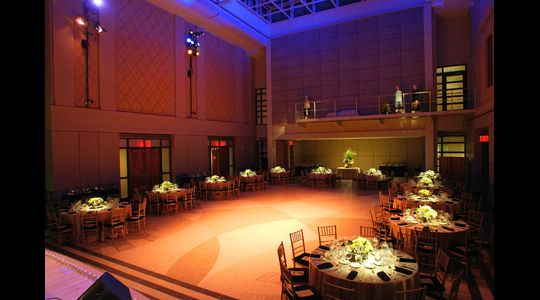

And indeed there was something castle-like in the elegant venue for the event, the impressive Montclair Art Museum. There is on its lowest level a large multi-purpose room that served equally well as cocktail lounge and lecture theater. In it was gathered an impressive cohort of supporters and abettors of the humanities in the State of New Jersey. Among them I was delighted to discover a number of personal friends and three former students. One of them was a man whose dissertation I had helped to direct forty years ago, and whom I had not actually seen in all that time.


Bloguiste, Leach, and Katz in ideological conversation


The “main event” of the evening was a staged conversation—meaning in this instance a conversation that took place upon a stage. The interlocutors were yours truly and Jim Leach, the Chairman of the National Endowment of the Humanities, moderated by my friend and colleague Stan Katz, the former president of the American Council of Learned Societies. I found Leach, whom I had not before met to be a particularly impressive and attractive fellow. He is an Iowan and a former college wrestler. He spent thirty years in Congress. One of his principal initiatives as Chairman of the NEH has been a “civility tour” throughout the country, a kind of intellectual pilgrimage devoted to the quaint notion that it is possible to exchange and discuss conflicting ideas, even passionately invested ideas, without sounding like the Kentucky senate race.


The announced topic of the conversation was “Ideologies and American Ideals from the Cold War to the War on Terror”. Naturally we mainly talked about other things, though with valiant feints toward “ideology”. Should you be really curious, you can judge for yourselves. The conversation was recorded, and will soon be posted on the NJCH website.


I left the evening with such a deep sense of satisfaction that you might think this was the only prize I had ever won. It isn’t.

And so, as old Pepys used to say, to bed.


Tuesday, October 12, 2010

Return of the Native

As a boy in school I memorized quite a few poems. They were naturally such poems as appealed to the vestigial Victorian tastes of my earliest English teachers, most of whom had been born in the nineteenth century. They have stuck with me, and “when in idle or in vacant mood” they often return to my mind, less colorful than Wordsworth’s daffodils, but hardly less pleasurable.


There is, for example, the great “Ode” of Arthur O'Shaughnessy. What? Not on your ipod? Shame on you. “We are the music makers. We are the dreamers of dreams…” That poem is the origin, I believe, of the now clichéd phrase movers and shakers. Another favorite was James Russell Lowell’s prelude to The Vision of Sir Launfal--“And what is so rare as a day in June?...” That is a lovely poem with many sweet phrases and images, though it does have one line that schoolboys are likely to apply in a context probably unintended by the poet: “Every clod feels a stir of might.” There were quite a few clods in that particular class. Also, lines from The Lay of the Last Minstrel by the great Sir Walter Scott, so unread and undervalued today:

BREATHES there the man with soul so dead,
Who never to himself hath said,
‘This is my own, my native land!’
Whose heart hath ne’er within him burn’d
As home his footsteps he hath turn’d
From wandering on a foreign strand?


Fog along the Buffalo River, Marion County, Arkansas


Such a man perhaps does breathe somewhere, but not within my mortal frame. Even without the prerequisite foreign strand that’s the way I always feel as through the small, square window of an airline cabin, I catch my first glimpseof the Ozarks. Such glimpses have been infrequent for the last thirty years. They are bound to be rarer still now that my last two remaining Fleming aunts are gone. But just now my own, my native land is particularly vivid in my memory.


I arrived at Newark from Paris in the middle of the afternoon last Wednesday. Less than twenty-four hours later I was back at EWR to catch a flight to XNA. As O’Shaughnessy is to English odes, so perhaps XNA is to airport codes: insufficiently known. It stands for “Northwest Arkansas Regional,” and by rights it should have a “W” (for Walton) in it. Mr. Walton was of the opinion that if a manufacturer, distributor, or importer wanted to sell things to Wal-Mart, he ought to be willing to come out to Arkansas for a little chat. Soon there was a handsome airport, with daily direct flights from the East Coast, rising among the cattle ponds and the scrub oak.


Tempted though I am to pause in admiration of the superior powers of the law of supply-and-demand in creating useful infrastructure (what you might call Bridges to Somewhere), I must move on to Fayetteville, one of the towns principally served by this airport, the home of the University of Arkansas. For I was on my way to that institution to deliver an address before the Arkansas Philological Association. This was an experience delightful to me in every way. The weather was beautiful. My hosts were gracious. The conference itself offered many engaging papers and fiction readings, but at a pace sufficiently leisurely to allow opportunity to walk about the burgeoning town. Fayetteville has become a happening place, with all the funky evidences of a vibrant student culture that one would find in Madison or Ann Arbor.


If you absolutely must have an animal mascot, and of course you must, go for baroque. What Styrofoam badger or cardboard wolverine can compete with a really gross razorback hog in vermilion plastic? On the fresh autumn morning of Saturday, as I was preparing to leave, they set up a bountiful farmer’s market around the county court house, complete with scruffy or languid musician at each corner. Listen! I’ve been to the Farmer’s Market in Santa Monica, and if the Arkansans can just cultivate a little more pretension, they’ll be there.


J. William Fulbright (1905-1995)

The newish liberal arts college at the University of Arkansas is named in honor of J. William Fulbright, who had first been a law professor and then the young president of the institution in the late 1930s, before he began his distinguished career in Congress. He played a role in my own life. He had been a Rhodes Scholar. His experience of study abroad was a major factor behind the legislation he sponsored in 1946 establishing those international study grants that bear his name. It also encouraged some private philanthropy. He took a personal interest in any young Arkansan elected to the Rhodes—an event that happened perhaps every three or four years. That is how I came to spend the summer of 1958, before going to Oxford, in Washington in a high-paying sinecure in his patronage gift, filling orders in the Senate Document Room. That whole operation has doubtless disappeared in the computer age, but it offered me a uniquely educational experience. It was probably a similar arrangement that first brought Rhodes Scholar-elect William Jefferson Clinton into Fulbright’s orbit a decade later. The rest is history.


Though we have politicians galore in Washington, you’ll be hard pressed to find a statesman. But Bill Fulbright was, in my view, a real statesman. Since people come in packages he was also, perforce, a few other things as well, a southern politico among them. But history, which seems so soon to have forgiven Teddy Kennedy Chappaquiddick, and Robert Byrd the Ku Klux Klan, will probably turn a blind eye to Fulbright’s signature on the Southern Manifesto.


I had no commerce with the Senator after Oxford. But once about 1990, before XNA had opened, I was on one of the old Ozark Airlines propeller flights to Harrison, with only about a dozen passengers. Senator Fulbright and his wife were aboard, to be taken by a plane yet smaller from Harrison on toward Fayetteville. I don’t like fame-chasers, but I spotted him and struggled up the bouncing aisle to speak to him. It frequently happens in life that what is a plausible idea in theory turns out to be an impossible to achieve in reality. I murmured a greeting, but one close glimpse revealed an ill and confused old man with trembling jaw and uncomprehending, vacant stare. I returned to my seat. Perhaps this little memoir can belatedly convey my gratitude and admiration.


I am overwhelmed and embarrassed to have received so much public and private encouragement in response to the unseemly grumbling with which I began my last post. You can expect another essay next week, sans grumble. It may, exceptionally, be posted on Thursday, since I’ll probably want to report on what happened on Wednesday night. There’s a big hint.

Tuesday, October 5, 2010

Waiting for Robin


I am flying back to America later this morning, where I’ll be occupied on business for a couple weeks. This means I’m a little pressed for time just as “Gladly Lerne, Gladly Teche” approaches a possible crisis. I long ago sensed that I would be dipping into the danger zone if the number of blog postings overtook the number of registered Followers. That is just about to happen. Furthermore, the blog has not elicited any readers’ comments for a month. It’s one thing to lecture to students you suspect are not listening, quite another to write essays for readers who aren’t there. Maybe it is true, as one trusted friend tells me, that the blog is such a debased form that its only audience is one whose favorite genre is the political rant. I don’t really believe that, but as ranting requires little time and less thought, I’ll rant away.


One of my birthday presents was a copy of Pierre Bayard’s How to Talk about Books You Haven’t Read. Perhaps I’ll have something to say about it when I’ve read it, but just holding it in my hand has empowered me. I now feel confident about talking about a film I haven’t seen: Waiting for Superman. It’s a little hard from abroad to tell what is really big at home in America even from faithful visits to a few trustworthy websites, but Waiting for Superman pretty clearly is or ought to be big. As I do not know from experience, Waiting for Superman is about a group of kids trying, by lottery, to get out of their dreadful public schools and into supposedly much better charter schools.


I spent a career in education, with more than forty years of classroom experience. I am well aware that one size does not fit all, but I do think I know how our schools could be improved. I have three suggestions. But only one has to do with Superman (the teachers), the other two with Robin (the pupils).


My suggestion about teachers is this. Teachers ought to be real experts in an actual field of study: mathematics, biology, physics, English language and literature, Spanish, whatever. If teachers are going to be required to have advanced degrees, let those degrees be in a real subject and not in “Education”. During its golden age, the old German Gymnasium was staffed mainly with Ph.Ds. Lord knows we need all the thoughtful and innovative education experts we can get; but actual teachers ought to know a lot about what they teach, and they ought to have the opportunity to continue to learn more throughout their careers. Everybody knows that deep knowledge of a subject matter is not a guarantor of good teaching. Unfortunately many educational administrators seem to think it is an impediment.


In my career I taught many well-received special seminars for high school teachers, and it was clear to me that what the teachers most appreciated about them was their serious scholarly content. Naturally this evidence is valueless to the educational establishment because it is impressionistic and anecdotal. The only evidence worth having is evidence supported by “research models” and “studies,” most of which will then “show” something counter-intuitive. When the anecdotal strays across the frontier of the politically correct it becomes the stereotypical.


Thus if an academic sociologist publishes a book full of tables showing that 82% of Middle-Patagonian speakers live in mud huts, that 73% of them are functionally illiterate, that 78% eat Pringles at least four times a week, that 92% percent wear sarongs, and of that number 98% percent wear them back to front, that is a work of social science. If an observant novelist creates a fictional Pringle-chomping, sarong-wearing Middle Patagonian speaker who lives in a mud hut, that is a negative stereotype. And if Middle Patagonian speakers were in any way to be a racial group—instead of being, as they are, entirely imaginary--it would then be a doubly damnable racial stereotype. Someday I may write an essay on the utility of stereotypes, but not today.


Having established the first pre-requisite for high-achieving teachers, let me eschew both anecdote and stereotype in proposing in abstract terms the two first pre-requisites for high-achieving students. They both involve the necessity of distinguishing what is a reasonable role for the public schools and what is not. The first is that the student before he or she ever steps across the school threshold be provided with two loving parents with whom they live in reasonable tranquility and regularly take their adequately nutritional evening meals, at which occasions they frequently hear and/or participate in conversation of a general nature, often including words of three and four syllables. Let there also be a few books, magazines and newspapers around, and let the children see their parents reading them from time to time. These conditions should prevail throughout the entire period of primary education, and indeed beyond. There will always be exceptions to an ideal norm. But if on a massive scale it proves impossible to provide such conditions, we have indeed discovered a grievous and heart-rending social failure, but it is not a failure of the school system, and certainly not a failure of those children’s teachers; and it will not be remedied by any conceivable policy or program emanating from the Department of Education. Heroic teachers will do their level best to overcome such huge obstacles, but they will succeed only very rarely and, so to speak, anecdotally.


The second and closely related pre-requisite is that Robin really has to want to be Superman’s sidekick. Students from an early age should really want to learn, to do well in school, and to work hard to do so, both in and out of the school buiding. They should be encouraged, directed, and indeed disciplined by their parents toward high-achieving goals. Any good teacher will try to be “engaging” and make a serious effort to “meet the students where they are”; but contrary to anything you might have picked up from The Dead Poets’ Society, teachers are not actually entertainers, shamans, or thaumaturgs. We have so greatly “defined deviance down” in Pat Moynihan’s fine phrase, that student laziness, vulgarity, chronic indiscipline, recalcitrance, physical and intellectual slovinliness, and general yahooism have become the accepted platform upon which our teachers are expected to work in many of our urban schools. Many teachers have known no other context. These are not, however, features of a universal human nature, but socially learned and socially tolerated behaviors. You will not find schools or school children like ours in Iceland or South Korea. You didn’t find many of them here fifty years ago.


There is a great deal of talk these days about unfairness and inequality in our society. The alternatives as I see them are to embrace the truly failed efforts that the last century came up with to establish a fictive equality of results, or to work to restore the means of a genuine equality of opportunity. The great engine of social mobility in America is education and the opportunities that flow from it. I know this from intimate experience. Those who are sincerely concerned about the grievous problems we face will start by talking frankly about the chronic ailments of which our failing schools are merely grotesque symptoms.


At a rally against violence, Chicago IL


SIGNS OF THE TIMES

&

THE STUDENTS HOLDING THEM


Math Olympians, Dayspring Christian Academy, Attleboro MA

,

Tuesday, September 28, 2010

Shared Treasures


I have in the past allowed myself some discouraging remarks about the state of higher education in Britain, because it had seemed to me that in recent years the Brits have taken up some of the worst features of our American system at the expense of the better ones. Accordingly, I feel honor bound to report on evidence of a very different kind: the highly enjoyable and exhilarating weekend Joan and I just spent in Oxford, our shared alma mater. In an earlier posting I reported on one of the university’s American reunions. In this one I touch on our experience of one of its “Oxford Thinking” week-ends. Putting this in our parochial terms, such a weekend is more substantial than a “Princeton Today” program, but less grand than a Princeton Alumni Day.


The great battle in Oxford is, and for some time will continue to be, the jockeying between the individual, autonomous colleges and the growing power and ambitions of a central university administration. The joke current in my undergraduate days half a century ago involved the American tourist who arrives in town and baffles a man he meets in the street by asking him, “Which way is the University?” The “University” being a merely platonic concept, it was as though he were asking directions to the Sorry State of Affairs, or to see a printed list of No Uncertain Terms. The weight of tradition and academic conservatism, complicated by ancient legal arrangements hardly imaginable in America, bolster the college-centered vision. Common sense, the realities of modernity, and the palpable need for the effective deployment of limited resources suggest that the more “centralized” vision must certainly win out. These Alumni Weekends give incidental evidence that it is winning.


In this regard it was significant that the only venue really convenient for an event of this sort—the Said Business School next to the railroad station—is among the newest, least traditionally “Oxonian”, and most architecturally nondescript sites in Oxford. There simply isn’t anywhere else one could run five or six concurrent lectures for fifty or more people—a requirement it met to perfection. The thoughtfully chosen theme of the week-end was “Shared Treasures.” This phrase drew explicit attention to the breath-taking interior re-designing of the University's Ashmolean Museum, fairly recently completed, but in a larger sense it reminded us all of the extent to which our ancient university in its ancient city is among the great shared treasures of the world’s cultural patrimony.

The Ashmolean Museum, Oxford: the old and the new


The principal “shared treasures” were intellectual: a dazzling array of lectures by several of Oxford’s most celebrated scholars, among which we had to make difficult choices. To report at length would protract this post unduly, but my own top three—out of a sumptuous menu--were Hermione Lee’s panel on biography, a lecture by Emma Smith on the history of the Bodleian’s copy of the Shakespeare First Folio, and an absolutely bravura and apparently off the cuff talk about the English Reformation by religious historian Professor Diarmaid MacCulloch. That’s one erudite cuff, let me tell you.


The trip to Oxford had a double purpose, only part of which I have described. The occasion gave us the opportunity to stay with old and dear friends, Margaret and Derek Davies. Margaret had been among our cohort studying English before she married the young law don of Saint Catherine’s College. For many decades they lived on a marvelous large property on Boar’s Hill. They have now retired to a smaller version of it at the base of the hill, in the village of Cumnor. There is a special quality to ancient friendships even as there is to ancient universities, and we much enjoyed their mellow hospitality. On Sunday morning we went along to the parish church, Saint Michael’s, where a large and voluble congregation was, by chance, celebrating their patronal festival (Michaelmas being September 29—i.e, today). The priest apologized for the fact that he could not actually document earlier celebrations in the spot much further back than seven hundred years, even though Anglo-Saxons were probably worshipping there well before the year 1000.

The parish church of Saint Michael the Archangel: Cumnor, Oxon.


For us the Eucharist is the greatest of shared treasures, and to partake in a place it has been shared for a millennium was most pleasing. But there was another treasure yet to come. We spent Sunday night in a London hotel near Saint Pancras Station, whence the Eurostar for Paris leaves. That meant we were also near the British Museum, and that we would to able to spend part of a morning there. With limited time, we decided to focus on a single goal—the hoard of Anglo-Saxon gold, the largest ever found, recently uncovered in Staffordshire. Well, it had been there, briefly, one of the guards explained. A pity…but we had just missed it. It had now been returned to its proper and permanent home in the Midlands. “But,” he added when he noted the disappointment on our faces, “just over there is the Fishpool.”

For where your treasure is, there will your heart be also (Luke 12:34)


He was pointing toward Room 40, one of the “new” medieval galleries opened only last year and as yet unseen by me. More specifically he was pointing toward the first large case you see as you enter the room. In it, lavishly scattered like the petals from golden roses, are 1237 bright shining coins of the fifteenth century. This is the Fishpool Hoard, and I choose my flowery image with intention. It is quite possible that these gold coins, together with a few exquisite pieces of jewelry, were hastily buried by defeated Lancastrians on the run following one of the skirmishes of the Wars of the Roses—the Battle of Hexham, in 1464. The excitement of my own “discovery” of them can hardly have been less intense than that of the workmen who dug them up on a Nottinghamshire building site forty-five years ago. I have spent my professional life trying to uncover and share the intellectual treasures of the past. This golden hoard was thus the perfect terminal punctuation for our weekend of Shared Treasures. I made a feint at reading on the train back to Paris, but mainly I was daydreaming.


One treasure (the recent Anglo-Saxon hoard) went unshared--until I can get to the Midlands


Wednesday, September 22, 2010

The Tea Party in Chains


Among the great books I have read in the last five years is the two volume work by E. B. Tylor entitled Primitive Culture (1871). Tylor, an Oxford anthropologist and one of the founders of the discipline, is so little read today that I found he was merely a name to my son, a recent Ph.D. in anthropology. Of course any pioneer anthropologist imprudent enough to use the word “primitive” in a title will have long ago suffered the Oedipal fate of so many other politically incorrect patriarchs.


Sir Edward Burnett Tylor (1832-1917)

What I found particularly striking in Tylor had little to do with the “primitive”. What challenged me is his explanation of the principle of cultural conservatism. “When a custom, an art, or an opinion is fairly started in the world,” he writes, “disturbing influences may long affect it so slightly that it may keep its course from generation to generation, as a stream once settled in its bed will flow on for ages.” If you substitute the word rut for stream bed, you’ll see where culture is stuck. He goes so far as to say that most things that exist in the world exist for the reason that they once existed. That is an idea deserving pause for thought.


Living the expatriate life even briefly offers that pause, for one is constantly importuned to pass judgment on the ways the small experiences of daily life seem “different”, and different from what. Some years ago when I was making a study of the life and times of Christopher Columbus I was struck by what I took to be a risible feature of his log-books. Here was the first European observer known to record his impressions of a literally New World with all its fascinating alterities. Yet all his experiences seemed to fit succinctly into one of two categories. Things were either “like what we have in Castile,” or “not like what we have in Castile.”


Of course when you stop to think about it, all experience in all times and places, anywhere and forever, will fit into one of those two categories. The question is: how good are the categories? My natural instinct in encountering the thousand particularities of a day in Paris is not unlike Columbus’s. Try as I might, I cannot escape the default paradigm: is this or is is this not what it’s like “in America”.


Parts of Tylor’s book now seem ironic. His vast researches so convinced him of the ineluctably conservative nature of culture that he could not for a moment anticipate the vastness of the changes about to break in upon the world in the twentieth century.


Many aspects of the old life once regarded as unalterable have surrendered to the demands of efficiency. We no longer have twenty systems of linear measurement. We are basically down to two, with the metric system slowly but surely winning. Mostly the big things here and in other parts of Europe really are pretty much like they are in America. That is one of the reasons, I suppose, that small things claim such prominence. Why should you have to deposit a coin in a slot in its pushbar in order to get a shopping cart in a supermarket? Then, again, why not? You do get the coin back when you return the cart to home base, and I have yet to see a stray cart around the town.


The biggest thing that’s not like what we have in Castile is language—metaphorically true even if you should happen to be in Castile. If there’s an argument for reducing the number of measuring systems, surely there’s an argument for reducing the number of writing systems. But I don’t see any volunteers for linguistic self-immolation in Beijing, Moscow, Rome, or London. Living in France for even fifteen minutes will teach you the overwhelming difficulty of learning the French language, especially if you were operating under the delusion that you already sort of knew it. You grasp immediately the huge chasm between basic functional literacy and actual cultural participation. This week the sad evidence was to be found in incatenated ducks and the Tea Party.


There is a venerable weekly satirical magazine here called Le Canard Enchaî. That “means” The Chained Duck. One of my French professors in college told me how great this thing was. Hence, I have been trying to read it, totally without success, since I first visited this country in the 1950s.


Simply to understand how a magazine can be called The Chained Duck requires a boring course in an obscure period of French political history. Then your troubles really begin. Usually I don’t get the cartoons. I cannot decipher the jokes. Frequently I am unable to identify even the political figures being satirized, or the events alluded to. The trouble is, I don’t really get the language. Though the Canard is definitely not like what we have in Castile, you might try to imagine The Onion written in, say, rapper patter.


Cultural incomprehension is a two-way street. I would point to the total mystification of the “quality” French press in trying to give an intelligible account of the role of the Tea Party in the current moment of American politics. Yes, I realize that the New York Times has no idea what the Tea Party is all about either, and I may not myself; but the French press is operating at an altogether different level of confusion and incomprehension.


Confusion begins with the fact that while the French word parti does denote a political organization, it does not denote a pleasurable social event. Even in Anglophone countries a tea party is hardly what it was in the first sentence of A Portrait of a Lady: “Under certain circumstances there are few hours in life more agreeable than the hour dedicated to the ceremony known as afternoon tea.” But even if you can work your way through that, the whole deal about the Tea Party (get it?, get it?) is that it is supposed to connect thematically with some shenanigans in Boston harbor on December 16, 1773. Try explaining that to some Frenchman at a party—er, soirée. I tried on Saturday night, and it’s not easy.

"Where's the good of a blog," thought Alice, "without pictures or conversations?”

Wednesday, September 15, 2010

What's in a name? Keeping up with the Joneses


When I heard that Terry Jones was planning a churchyard barbeque of Korans, my reaction was probably pretty standard for my socio-economic group. I was shocked, appalled, revolted, outraged—you name it. I didn’t telephone him the way Secretary Gates did. I didn’t broadcast a public display of my political frustration with him, as the President did. And I certainly didn’t rush to Florida with my video camera to abet him as half the so-called journalists in the country did.

I was nonetheless mightily concerned, because it just didn’t sound like the Terry Jones I know. We actually overlapped slightly at Oxford. He was at Teddy Hall, where he must have worked with my old friend Del Kolve. Anyway, I last saw Jones a few years ago at Kolve’s splendid retirement bash at UCLA. Of course Jones and I have had our disagreements before. I strenuously disagree with his interpretation of Chaucer’s knight, for instance. It’s always a mistake, in my view, to confuse ideal literary stereotypes with historical documents. But who could fail to applaud the genius of the inventor of “Monty Python”?
Sure, he’s had some embarrassing press in the past. But just at the moment I am overwhelmed with compassionate good feelings for anyone suffering the misfortune of being named Terry Jones. Nothing ought to be more personal than our personal names, but they are constantly being highjacked by others, and seldom with pleasing results. I learned this early, as no doubt anyone named John must do. To her dying day my grandmother told me that the biblical meaning of John is “God’s grace”. Why, I subsequently wondered, is Merriam-Webster silent about God’s grace but quite vocal about (1) a toilet, and (2) a prostitute’s customer? As I walk down the street beautiful women shout out my name, then register offense when I respond. Wrong John.

Last week I mentioned how difficult it is for historians to figure out who the right Simon de Montfort is. But the de Montfort clan is a piece of cake when compared with the East Anglian Paston family of the fifteenth century, famously documented in the Paston Letters. The Pastons really loved the name John. There seem usually to have been two or three living brothers of that name. We are all familiar with the little “disambiguation” tables at the head of Wikipedia articles. With the Pastons it was the dinner table itself that needed “disambiguation”. In the case of the Joneses, the necessary disambiguation would be between the medieval Jones and the medievalist Jones.

Naturally, the problem of too many people chasing too few names has only become more acute with the huge population increases of modernity. I have personally come to terms with being merely the eighth or tenth most notorious of contemporary John Flemings, especially since, at least as yet, no dangerously demented evangelist is among our number. (There is a Louisiana politician, however, and that’s getting a bit too close for comfort.)

Being the wrong John Fleming has not been without its dividends. I am not, for example, nor ever have been, John Fleming (1919-2001) the self-made art historian, expert on the Adam brothers, and author or co-author of numerous well-received books concerning the art of many times and places. Nor, alas, have I ever owned his Italian villa. This man’s books frequently swelled my bibliography as confidently recited by people introducing me as a lecturer, and I once came close to a nice job offer on his account.

But since my field was English literature, the John Fleming who haunted my career was John Fleming (1910-1987), the prominent New York bibliophile, connoisseur, and book dealer to the rich and famous. It will not surprise you that we never met. This guy was very classy and obviously loaded. Half of the lengthy New York Times obituary was devoted to his amazing apartment. He used to take out full-page ads in The New Yorker in which a single, central, dolphin of type—JOHN FLEMING—swam in a sea of white at approximately $500 per square inch. You just had to know who John Fleming was and what he did; and if you had to ask, you couldn’t really know. In 2001 Sotheby’s auctioned off a superb first folio of Shakespeare for a tidy $6,166,000. Mr. Fleming was gone by then, but he had been the last dealer to flog it, and for quite a pretty penny I have to guess.

Fear of litigation from the tomb forbids my recital of some of my tales concerning this namesake, but one of the publishable ones is probably safe. Soon after I joined the Princeton English department one of my senior colleagues, Charles Ryskamp, left to become the Director of the Pierpont Morgan Library. After a distinguished tenure in that position he became the head of the Frick Collection. His was, in short, an absolutely amazing career in the world of private cultural institutions in New York, and he spent much of it in his dinner jacket, tirelessly pursuing new acquisitions and the funds to purchase and maintain them. Charles Ryskamp died quite recently, and Verlyn Klinkenborg, one of our former graduate students who is now a regular contributor to the Times editorial page, wrote a lovely memorial of him.

Charles Ryskamp (1928-2010), amid objets

The Morgan Library used to be very sniffy about allowing mere graduate students to work there. I know that for a fact, because in 1962 I studied a couple of their manuscripts of the Roman de la Rose for my doctoral dissertation. The reading room gorgons did all they could to make me feel like Jude the Obscure contemplating from afar the dreaming spires of Christminster. About 1970 a very bright undergraduate student in our department was writing a senior thesis on a subject concerning which the Morgan possessed unique materials. Urged on by naiveté and the rashness of youth, I decided to try to push the envelope with a direct approach to my old buddy and former colleague, Director Charles Ryskamp.

I phoned the Morgan, and the conversation(s) went something like this.
Secretary I: “How may I direct your call?”
JVF: “May I speak with Mr. Ryskamp, please?” Followed by a significant pause, as though I had in peremptory fashion demanded an audience with the Pope. Secretary I forwarded me to Secretary II.
Secretary II: “How may we help you.”
JVF: “Well, I’d like to speak with Mr. Ryskamp, please”
Secretary II: “Concerning…”
JVF: “Well, it’s a professional matter…[Silent pause] I am a former colleague at Princeton.”
Secretary II: “I am afraid Mr. Ryskamp is out of town…perhaps you’d like to leave a message with his assistant, Ms. X.”
JVF: “Yes, thank you.”
Another long pause, followed by
Assistant X: “I am afraid Mr. Ryskamp is not available. Perhaps I can help you?...”
JVF: “Thank you, but I probably need to speak with him personally…[long pause]…Perhaps you could just tell him that John Fleming is trying to reach him.”
Assistant X: “Uhhhh” [followed by a really long pause, followed by]
Charles Ryskamp: “Johhhhn!” I heard my name purred with a kind of breathless excitement midway between Bing Crosby telling me that I was as welcome as the flowers of May to dear old Donegal and Mae West inviting me to come up and see her sometime.
JVF: “Charles, you’ve got the wrong John Fleming, but as I have you on the line, I have a favor I’d like to ask you….”
I knew I was home free. By special easement my undergraduate friend was allowed to use precious Milton materials in the Pierpont Morgan Library.

Tuesday, September 7, 2010

Montfort-l’Aumary


Rather scuffed and dog-eared from a sleepless overnight flight, I arrived on Thursday last to find the sun shining clear from the bright blue sky of a crisp and comfortable pre-autumnal day. This happy omen was an accurate harbinger of my first week in Paris: joyous reunion with granddaughters, some full and productive library days, a dish of pears and cheese, and some medieval countryside.

I mentioned in an earlier post that Joan had spent the previous ten days or so at Pertuis, in Vaucluse, at a kind of chamber music camp. The players were all amateurs, but many of them at an impressively high standard; and they came from many parts of the world. Among them was a lovely gentleman in our general age group, a Parisian bio-medical computer type on the cusp of retirement, named Marc Le Bret. Marc and Joan became friends, and he invited us to spend a day at his country place in nearby Montfort-l’Amaury. Our rapidly filling calendar suggested “Now, or never,” so on Saturday morning we headed off for Montparnasse station. Montfort is on a suburban line only thirty-five minutes west of Paris, not far beyond Versailles. But the village, at least M. Le Bret’s part of it, seemed at least a hundred years away.

His cottage, which dates from the era of Henri IV and shows it, is a part of a large old family compound at the village edge, with several old houses and a jumble of walled gardens. It practically abuts the large Fôret de Rambouillet, the second largest green space in France. In a leafy orchard garden amid fig trees, grape vines, and rows of kitchen vegetables we shared a huge grilled beefsteak with Marc, Marc’s son and Chinese daughter-in-law, and two delightful Franco-Chinese grandchildren.

Montfort denotes a fortified hill, and there are charming castle ruins at its highest point. The medieval lords of the place, the de Montforts, were international big shots. You don’t even need to be a medievalist to have heard of Simon de Montfort. (On the other hand you do need to be one to know which Simon de Montfort, since for purposes of maximal confusion there were about a dozen of them.) The one I’ll call the really “Bad” Simon de Montfort led the Albigensian Crusade. His just reward was having a large stone dropped upon his head from the walls of Toulouse by its besieged defenders. In order to appreciate the really “Good” Simon de Montfort you have to know that these guys were also the Earls of Leicester in England. “Good” or “English” Simon won the Battle of Lewes in 1264, took Henry III prisoner, and forced him to honor certain provisions of the Magna Carta ostensibly agreed to but in fact mainly ignored by his father, King John. One of these was consulting with the barons in a meeting that was vaguely parliamentary, on account of which Good Simon is sometimes known as “the Father of Parliament”.

There is a huge parish church in Montfort-l’Amaury, far larger than any conceivable past population could have required. It dates mainly from the sixteenth and seventeenth centuries. The town’s more interesting medieval relic is the vast necropolis, a combined cemetery and charnel house, which still has its portal in flamboyant Gothic, along with parts of its fabulous wooden arcade roof. On the outside wall one can still (if barely) make out the inscription of an old French memento mori: “As you are now, I once was; as I am now, you will one day be.” This ditty must be imagined to be spoken by an accompanying skeleton mounted in a niche. The term charnel house (also known as an ossuary) does not deserve its grimmer connotations.

Charnel houses were common in places where constrained space or other physical limitations did not allow for an infinitely expandable burial ground. When bodies were completely decomposed, the remaining bones, which took up considerably less space, could be compactly and even reverently stored in a charnel house. That made room for a new grave. Though long since laicized, the cemetery at Montfort-l’Amaury still has a thirty-year time limit. One of the graves had a note posted upon it from the Municipality announcing that its time was up and that the responsable needed to get to the Town Hall d’urgence. I presume the current tenant is no longer the responsable.

a bug and a bogue


Since Marc and Joan are musicians, a requirement of our tour of the town was a visit to the house, now a quirky museum, of Maurice Ravel, who lived there from 1921 until his death in 1937. You never know when you are going to learn something fascinating. We walked toward Ravel’s house along an old wall under chestnut trees. On the ground were bits of the prickly chestnut hulls or burs. I learned that the French word for this cortex, which I did not know, is bogue. Computer English has pretty thoroughly invaded the French language, despite the best efforts of the purists, who insist the thing is not a computer but an ordinateur. But there is one witty counter-attack. In speaking of a computer glitch, imperfection, or malfunction, Anglophones will speak of a bug in the system. Frenchmen speak of a bogue—a kind of bur beneath the cybernetic saddle I suppose!


Ravel’s house is a funny, steepled, old slate-roofed thing strung out in railway car fashion along a high ridge with a fabulous view—which is no doubt why he called it “La Belvédère”. The local lady who oversees the museum at hours of her choosing--and, as we learned, of her arbitrary alteration--is a delightful eccentric. As you enter the house she starts playing Boléro very loud on a stereo. Fortunately, she then turns it off. (Ravel himself famously said of Boléro: “Yes, it’s my masterpiece. Too bad there’s no music in it.”) Only when you see Ravel’s bed do you realize he must have been a midget. There was a good deal of potentially fascinating musical stuff, but the gardienne seemed more interested in the huge collection of bibelots. Several of these—especially a variety of miniature animal automata in metal, wood, and porcelain—fascinated three-year-old Jade Le Bret.

We came at last to the composer’s small study, a third of which was taken up with his magnificent piano. The gardienne insisted that one of us play it. Joan alone among the visitors was even a church hall pianist, and though she stoutly resisted, the gardienne’s repeated importunities at last so bogued her she did for a moment sit at Maurice Ravel’s piano and play—a snatch of Beethoven. In 1928, just before the Crash, Ravel made a kind of rave tour of America, which included an all-Ravel program in Boston greeted with a standing ovation. I thought Joan had made at least partial repayment, while at the same time earning a most happy memory of a most happy day.


The day was, however, not yet quite over. On our way to the station our genial host dropped a last delicious morsel of invaluable French trivia. After Ravel’s death his brother brought a new housekeeper to La Belvédère to keep the piano polished and the tchotchkes dusted. Her name was Celeste Alberet, and she had previously performed this office in the domicile of a certain literary gentleman named Marcel Proust. She was, one presumes, the world’s greatest expert on fastidious French bachelors.