Wednesday, August 9, 2023

Elitism

Elitism strikes again


            The Supreme Court decision about the legality of race-based college admissions has been almost universally—and in more than one instance probably hypocritically—deplored by American college and university administrators; but of course it has been accepted, for now, as the inconvenient law of the land.  But I doubt that much as been “settled.”  Quite apart from the widespread hope for a different court and a different decision at some point in the future, a large and well remunerated section of our legal fraternity have as their principal task finding ways of skirting such inconvenient laws as have not already been obviated by the friendly commerce of our large and well remunerated lobbying fraternity with the elected members of our Congress.  I don’t think we have any hard data on how the public rates lawyers on mass, only a frequently cited sanguinary suggestion in one of Shakespeare’s history plays.  But on Congress we do have a statistic: nineteen percent of Americans approve of the job it is doing.


            For the moment, the outrage of the aggrieved has shifted to another subject: legacy admissions.  That is the practice of giving some degree of preference to candidates for admission who have a plausible connection to the institution already.  This usually means that they are the children or grandchildren of alumni of the institution.  Oversimplifying somewhat: if you cannot have “affirmative action” for the underprivileged, how do you justify it for the overprivileged?  I am not entering the debate on the substance of the issues involved.  Neither one seems to me open-and-shut one way or the other.  The one dealt with by the Supreme Court was decided by a majority but not by a unanimous vote.  But I do want to talk about a topic front and center in the discussions: that is elitism.  Everybody seems to be against elitism, a very curious opinion to be held by citizens of the United States of America.  It seems to me that a lot of people don’t know what the word elite means.  For a long time I didn’t either.  I thought it referred only to the small type face on an old Remington portable typewriter.


            Elite is a French loan word, the past participle of the verb elire, which derives from the Latin eligo, the past participle of which is electus.  If electus sounds to you that it might have something to do with English elect, you are absolutely right.  What is elected or elite has been chosen from among plural options on some supposed belief in its comparative desirability.  The system of the American Constitutional political system is explicitly elitist.  We choose our legislators and our chief executives on the supposition of their superiority to alternative possibilities who are not elite or elected.  If you have ever voted for anything, if you have ever chosen one garment over another, if you have ever asked for chips rather than rice on the blue-plate special, you are an elitist.  If you put the Latin reflexive pronoun se at the front of eligo you get seligo, to select.  If you can in today’s English find a dime’s worth of difference between elect and select, please let me know. 


            Think of a few instances in which election or selection is involved.  Do you prefer any particular commercial good over another similar to it?  Is  the National Football League Draft “rigged” in favor of good football players?  If you prefer your soft-boiled egg pointy-side up in the eggcup, are you exercising malign discrimination against Big-Endians?  Is it unfair of your teacher to grade your course paper by a means other than the tossed-down-stairway method?  Now very manifestly the process of college admissions has to be an elite process that renders elite results.  Of course electing applicants for admission solely on the basis of their skin color would also be an exercise in elitism, as would specializing on the applicant’s eye color, whether their zipcodes begin with an even or an odd number, or possibly their shoe size.  This is not sophistry or philological arcana.  People who complain about “elitism” in American higher education, and in the practices of selective admission in general, are really complaining about something else, namely the social and sociological results they rightly or wrongly associate with a “good” college education.  But if it seems reasonable to you that the owners and managers of the New York Yankees hire their team members on the basis of their anticipated capacities to play baseball well, or that the Met choose its opera performers on its evaluation of their abilities to sing well, what possible objection can there be to a college admissions committee that tries in good faith to assess candidates on their probable abilities to thrive in, contribute to, and make the most of the educational opportunities in the specific institutional context on offer?  All of the “elite” colleges with which I am familiar are wealth-redistributing charities.  As one small contribution to this mission they have for many years run summer academies and the like, backed by energy and resources, in an effort to give some number of promising high school students from “underrepresented” groups the opportunity and the invitation to glimpse and participate in something like actual college life.  The motive is the sincere desire to inspire and encourage.  These are good faith institutional efforts, and one step ahead of mere symbolism.  But highly selective research institutions do not make the best use of their extraordinary resources by mounting remedial courses in basic literacy and numeracy, fundamental skills that since time immemorial have been regarded as the remit of elementary schools.  It is their elementary nature that makes secondary education secondary and higher education higher.  Though a topic for another essay, my opinion is that serious progress could be made in facing some of our problems of social inequality by yet further focusing national resources on the early years of public education.  But we need to do it with our eyes open.


            The schools and their teachers,--or, later,  the colleges and their professors-- should not be expected to do all the work, though they too often are.  “No Child Left Behind” is a great slogan for the right idea.  The limitations in its visible “outcomes” have not been the results of bad faith or the unwillingness to spend public money.  But at least half of our early education, surely, comes from the domestic setting, and from habits, practices, and expectations projected in a child’s home.  The triumph of the republican principle , which allows the individual citizen to express and act upon individual preference in search of  democratic decisions, has rightly been regarded as one of the lasting achievements of Enlightenment.  Yet true elitism, the maximization of  opportunity for wholesome independent choice, cannot thrive in a context of serious social pathology.

Wednesday, August 2, 2023

Owen Roberts

 
Ann Clwyd and Owen Roberts


            It will no doubt seem odd of me to write a memorial of a person who died in 2012, triggered by an obituary of his widow, who died less than two weeks ago.  Nonetheless I am moved to do so.  Joan’s sister-in-law Margaret Newman in England sent her an email saying that she had just seen in the Guardian the obituary of Ann Clwyd (1937-2023).  Margaret knew that we were friends of Ann’s.  I was able to find the obituary immediately, and though I thought I had known a good deal about Ann, I learned about several dimensions of her distinguished career that came as news to me.  She was for many years the Member of Parliament for Cynon Valley in South Wales, with many native Welsh speakers (like herself) among her constituents.  She became prominent during the Blair administration, and a figure in the national news, at the time of the controversy over the Iraq War.  The warm obituary in the Guardian includes the following sentence: “In 1963 she married Owen Roberts, a TV director and producer…”  This is the sentence that has generated my blog post.  Owen Roberts (1939-2012) was a friend of very long standing, beginning during my Oxford years, one of the closest I have ever had.  It is true that he was “a TV director and producer,” a datum merely incidental to his being a world-class Mensch.


            Many of my life decisions seem have been made rather casually.  As a Rhodes Scholar-elect I had to make up a wish-list of my three top choices of Oxford colleges.  We had all received a copy of the Oxford University Handbook to help us.  I knew nothing of the individual colleges, but Jesus had a least a name with which I was familiar, and its battels charges (food contract) was a few shillings cheaper than the rest.  From the  Handbook  I learned that Jesus was the only Oxford college founded by Elizabeth the First, and that it was especially partial to students from Wales.  What I knew about Wales was a rather pedestrian lunch dish, hardly distinguishable from a toasted cheese sandwich, which my aunt called “Welsh Rabbit” and my mother “Welsh Rarebit”.  I was soon enough to learn a good deal more.  The were many Welsh undergraduates in Jesus, including a sizeable number of Welsh-speakers.  The joke was that if you walked into the front quad of the college and loudly shouted out the name “Jones”, every third window would be opened.


            Among the first classmates I met was a very appealing, soft-spoken, good-looking guy named Owen Roberts.  He was a Welsh-speaker from Llan-something on Angelsey, the large island off the coast of North Wales.  He had come to Oxford to read (major in) history, concerning which he already seemed to me to know a prodigious amount.  We were destined to become  intimate friends.  He found my Americanness as curious and exotic as I found his Welshness, the study of which he greatly advanced by inviting me to spend the major part of one of our first six-week vacations in his home.  I left the Roberts household knowing a good deal more about Wales, and the ambiguous attitudes of many Welsh folk concerning England and the English, than I would have thought likely.  If you have seen the BBC video series “The Crown”, you are likely to remember the episode in which the current King Charles is, as a youth, invested in his full splendor as the Prince of Wales.  It is thought prudent by the London powers-that-be that in preparation for this solemn event, it would be a good thing, from the political point of view, if the young prince could learn enough Welsh to deliver a brief speech in that tongue.  So he is sent off to live in Wales under the supervision of a distinguished Welsh linguist, who not surprisingly turns out also to be a Welsh nationalist.  Poor Prince Charles has a great deal to learn, only part of it linguistic.  Owen’s father was in fact a Welsh scholar, among other things.  So I was a bit in that same situation, except for the fact that I was greeted only with warm-hearted friendship entirely without any political edge and without the requirement of learning a word of Welsh—though I couldn’t help learning a smattering.  The Robertses also fixed me up with my first British girlfriend, a lovely lass named Gabriella, home on vacation from her first year at the University of London.  But the distance between Oxford and London, though not very great, proved too great for the relationship to continue.  And by that time I probably had already met, or at least crossed paths with, my life-partner.  Somewhat later Owen lectured me about this woman, Joan, with a tinge of exasperation in his voice.  He told me that it was obvious that I was in love with her, that I might just be lucky enough to get her, but that I had better get on with it.  The rest is history.


            Youthful friendships are intense and indelible, especially those of one’s college years, filled as they are with a strange amalgam of serious intellectual industry and madcap irresponsibility.  Owen left Oxford with his cohort, swept up in the whirl of young professional life.  He was destined for distinction as a journalist.  He was for a time the head of Welsh broadcasting for the BBC, but he really more enjoyed working for one of the independent commercial networks.  I was aware of his marriage to Ann Clwyd, though I would not meet her for many years.  Owen had all the virtues of friendship, save one.  He was not good at writing letters.  Before the age of easy international telephonic communication, that was a serious impediment to staying in touch.  And then, far too soon, Owen was struck by the dread disease that he battled for most of his adult life—multiple sclerosis.  It killed him only in his early seventies, but it slowed him down considerably for decades before that.  I kept up with him irregularly, when I was in Britain; and he made one trip to New York, just to say he had been there.  He was already walking with a stick.  I couldn’t get him down to Princeton.  But Joan and I did have a lovely stay with him in Cardiff toward the end of his life.  It was on that same trip, I think, that Ann treated us to a drink in the House of Commons.  I don’t get that kind of treatment around here!  Eventually the disease did overwhelm him, and he died, apparently rather miserably, in the University hospital in Cardiff.  Ann Clwyd, who was outraged by his treatment there, and who was vocal in expressing the view that he “died like a battery hen,” raised the episode in Parliamentary debates about the National Health Service, of which she became a ferocious Socialist critic.


            The bitter taste of that final episode naturally depressed me when I heard about it.  But in retrospect it does nothing to cloud my admiration for a splendid man or dull the luster of one of the great friendships of my youth.  I was perhaps remiss in not writing about it at the time.  But I am now glad to be able to do so in reflective tranquility.  So here’s to my friend Owen Dryhurst Roberts (1939-2012).  Requiescat in pace.


Wednesday, July 26, 2023

Berry Picking

Father and daughter on the berry trail
 

            We are basking in the pleasure of a week’s visit from son Luke and his two delightful kids, the second visit of the year.  Melanie, alas, has had to remain in Montreal dealing with insurance agents and the like.  She has had to do that because her neighborhood in Notre Dame de Grace was visited by a flash flood while the family was away on a visit to the West coast.  The damage to their own basement was relatively minor compared with that of their immediate neighbors, but not so minor as not to need an insurance adjustor.  Actually there has been a fair amount of flash flooding recently up and down the Atlantic coast, including in our own local area.  The heat here has also been oppressive, and I blame it for the impoverished harvest of wild raspberries—which will become the main feature of this post in a paragraph or two.  Weather is big news these days.


It must have been on a particularly frigid morning in January, 1964—anyway, shortly after the Kennedy assassination-- that I stumbled into the Library of the University of Wisconsin in Madison at opening time.  I had discovered that the index of real cold in Madison was the funny feeling of the little hairs freezing within your nostrils.  That level had been reached the  moment I put my nose out of the door.  The heat within the vast vestibule of the library was like a rescue party.  There seemed to be nobody else in the building except for a classic old-school librarian of the Gorgon tribe, waiting at the gate.  I set out to charm her.  “Wow!” I said wittily.  “It is just a mite chilly out there.”  “Really?” she replied.  “I don’t much notice the weather….which is a pity, seeing as how it’s the only thing some people can talk about.”  It cut me to the quick .  I suspect that this good lady has long since gone to her reward, but if by any chance she has not, even she must now be talking about the weather.


To get back to the local wild raspberries, I have to begin with the admission that strictly speaking they are not real raspberries.  My son Richard, and other agricultural purists, in fact most people, call them wineberries.  The proper botanical name is Rubus phoenicolasius.  The redness is of a particularly alluring nature.  Even if you don’t know any Latin you probably know what a rubric is, an annotation or brief commentary in an old book, especially a religious one like the Bible or the Book of Common Prayer.  In medieval manuscripts these notes were often written in red ink—or rubricated.  And since raspberries confusingly come in three shades—yellow, black, and red—we also speak of “red raspberries”.  Wineberries are both smaller and much seedier than the cultivated raspberries that you get in grocery stores. The seeds are a deal-breaker for the faint of heart, but not for those who grew up on breakfast grits. My opinion, not shared by everyone, is that their taste is more intense, and that they are especially fine in baked goods like cobblers topped by a little vanilla ice cream.  My son Richard despises the wineberry because it is a foreign and invasive species.  This indictment is true.  We know from various historical episodes that it is very easy quite without intention to disturb ecological systems by importing, say, a few of those cute bunnies from the old country.  Problem is, there may not be any old country vulpine varmints to combat the results of the favorite outdoor activities of the over-sexed rabbits.  Somebody, sometime, had the bright idea of importing kudzu into our land.  Kudzu is a voracious predator that ought to be the subject of a horror movie.  It is affectionately known as “the vine that ate the South”.  If you have ever been on an Interstate south of Washington, you are bound to have seen its majestic green curtains smothering the parkways.  On the other hand you might argue—and it’s likely that somebody has—that a country of colonists and immigrants ought to be more welcoming.  If “diversity” is a cardinal good in the human domain, why should we disdain it in the vegetable kingdom?


But I digress.  My complaint is not about the berries but about the weather, which I am convinced has this year distressed the plants and  reduced the size of the crop.  It simply was too hot during too long a period of the early formation.  Yet though berries are indeed  crucial to berry picking, they are not what berry picking is really about.  No, what berry picking is about is the effort to find in a few undeveloped spaces of the New Jersey suburban landscape something of the wonder and thrill experienced by a young lad in the deep country some eighty years ago.  This beautiful thing, so delicious to eat, just lying about free to anybody ambitious enough to seek it out and hardy enough to endure some sunburn and berry prickles.  The experience, while not exactly subject to duplication, does turn out to be transferable.  So now the pleasure is mainly in seeing the pleasure of our young grandchildren.  They live in Montreal, and frequently are in the marvelous parks and deep country of Quebec.  They are by no means city-slickers.  Even so they thrill at the discovery of brightly colored succulence superficially concealed among the jungles of unattended suburban land that, so far, has dodged the Jersey urge to cover anything green with macadam.  There is a pseudo-primitivism or rurality in the activity.  It cannot be quenched even by the sound of cars on a road not seventy-five yards away.  According to the ancients, the first age of the world, when Saturn ruled, was one of simplicity and bliss, when the still innocent and untoiling human race fed itself on the uncultivated fruits of the earth.  This was the Golden Age of the poets; and the famous poetic meditation upon it by Boethius in the early sixth century was imitated by the great poets of our language beginning with King Alfred and Chaucer.


Young John Henry and Hazel are as yet too young for Latin meters or even their classical English remakings.  But they are not too old to thrill at faint glimpses of Golden Age life.  So it didn’t matter at all that the berries were comparatively few in number and a bit disappointing in their hardiness.  It is the journey, not the destination; and for young sensibilities not yet taught that transcendence is not cool, it may still be found in strange places.  Thus ardent possibilities of the epic and heroic are awaiting discovering even in the “undeveloped” open spaces of suburban New Jersey.  Maybe even, especially there.  To strive, to seek, to find, and not to yield!


Wednesday, July 19, 2023

Gilgo Beach


            Seldom do I find myself in the position of great poets of the past, but I just underwent an Ovidian transformation of sorts.  According to Ovid’s playful testimony he had just written the first words of a martial Virgilian epic when his nemesis, playful Cupid at his shoulder, reached down and stole one of the feet out of his first hexameter line.  Now the line was in elegiac meter, forcing the poet to return to his habitual genre of naughty love poems.  Well, I had already written the better part of an essay about affirmative action in college admissions, a sort of supplement to my last, when it occurred to me that probably neither I nor my audience was up for back-to-back ponderous political posturing.  But mainly I was distracted by an article in the morning paper about the indictment of a suspect in the Gilgo Beach serial murders.


            Given the publication statistics of “true crime” literature I at least can claim plenty of company in my interest in historical episodes of homicide.  There is probably a reason that the murder mystery is among the most popular of fictional genres.  Most people are at least aware of certain celebrated historical episodes, such as those involving Jack the Ripper and Lizzie Borden; but I often go back further than that.  Just at the moment I am deep into the case of a famous and consequential murder that took place on the public street in Paris in 1413.  During the endless frustration and ennui of the library lockout of Covid, I discovered many podcasts and Youtube channels featuring or even specializing in homicide, most of them crude and off putting, but a few thoughtful and thought-provoking.  I got caught up in the recent trial in the Murdaugh case in the South, which presented in a particularly troubling form both the “banality of evil” and the Pauline “mystery of iniquity.”


            I had not been aware of the case prominent in today’s Times, which manifested itself in the discovery in 2010 of the remains of four murdered prostitutes deposited on wasteland on Gilgo Beach in the greater New York City area. Gilgo Beach is part of an infrequently visited thin ribbon of land—it rather gives the appearance of a barrier reef—that parallels part of the south shore of Long Island.  Other remains, possibly the work of the same killer, were also found later.  Police made little headway, and the case went cold.  As is frequently true, some critics of the police claimed that they had “bungled” the job or perhaps even did not invest much energy in it because of their disdain for the victims.  That is the angle taken at the Times reporters who largely credit the apparent late success of the investigation to a new woman director who reanimated the investigation after its long drift in the male doldrums.  This police executive merits high praise.  However, not every problem in the world is the result of malign discrimination.  Sadistic sexual murder visited upon a prostitute is no less heinous than sadistic murder visited upon a nun or a neurosurgeon; but it is much more frequently and easily achieved.  The occupational activities of such victims are almost always conducted with a certain degree of stealth, and often enough in a recklessness of personal desperation.  If there is no opprobrium to be found in renting out one’s body for the sexual gratification of random clients, there should be no opprobrium to be found in the nouns prostitution and prostitute, both of which have long and stable linguistic histories and are more precise than the obvious journalistic euphemisms “sex work” and sex worker”.  The occupational perils of a woman habitually advertising sex for money on Craig’s List in New York City  must surely be significant, and easily rival those of Grand Prix racing drivers or of sky divers.  Two points struck me in the bail application document of the criminal indictment recently delivered by a grand jury and now printed in the press.  The first is that the highly intelligent killer was as careful and disciplined in his efforts to conceal his identity as he was evil and sadistic in the brutality of his murders.  He enjoyed tormenting relatives of his victims in what he undoubtedly thought were untraceable phone calls, and seems like many deranged murderers to have considered his own considerable intelligence and cunning superior to the pedestrian efforts of a bunch of flatfoots.  This was not an easy case to investigate, and the police certainly did make at least one serious mistake in not earlier fully realizing the significance of a report of the sighting of a vehicle possibly connected to the killer.  The second is that the police work leading to the indictment, however slow-moving and slogging, was eventually brilliant, and to a large extent enabled by forensic techniques and experience not available fifteen years ago.


            The accused man is a successful middle class professional, an architectural consultant with recognized savvy concerning the complicated world of NYC’s construction bureaucracy.  He fits several of the expected categories of earlier serial killers.  He is a white male.  He is of such “ordinariness” that he fits plausibly into the protean profiles devised by serial killer experts, an apparently numerous fraternity.  The first requirement: Nobody would have ever expected this of him, though of course at least one neighbor, once the accused had been fingered by the police, was not in fact surprised.  This must raise the question of whether one does know people of whom one does expect grotesquely vicious, cruel, and perverted homicides.  All this seems to be par for the course, serial-killer-wise.  The “true crime” literature might seem to suggest that in cases of this sort sleuths would do well to begin by ruling out all those they think might have done it and concentrate solely on the multitudes who couldn’t possibly have done it, for there only is he to be found.  After the publication and press coverage of the grand jury’s detailed legal document, there doesn’t seem to be a lot more left for prosecutors to do in a trial.  This is less an instance of trying a case in the newspapers than of announcing the likely pattern of a forgone conclusion.  So the police and the press sure better be right.


            If the Gilgo Beach murders  offer no relief from our burden of apprehension of the unfathomable depths of human depravity, one may at least take heart at ingenious advances in criminal science.  The indictment document is mainly a meticulous catalog of the accused’s cell phone activity.  The techniques police experts used in analyzing it, though too complex for brief summary here, seemed to me dazzling.  It would appear that the wizardry of electronic communications is now promising to offer as much of an advance in criminal forensics as the analysis of DNA did in recent decades.  Even though I have difficulty with the most basic functions of my own phone, I dimly grasp the damning implications of the various charts and maps of the suspect’s wandering phone(s) and other features of his complex telephonic life illustrating the indictment.  Perhaps it is no bad thing that I usually can’t find my phone.  There is also DNA evidence of an oblique but convincing nature.

Wednesday, July 12, 2023

Supremely Decisive


I have mentioned in the past my admiration for the late Robert Goheen (1919-2008), former president of my institution who, when I was more than fifty years younger gave me a memorable piece of much-needed advice.  He suggested that on validly contested issues I should never be certain that my own opinion was more than eighty percent right.  That is because very few complicated issues are subject to the definitive resolution of a simple problem of addition or subtraction.  Two plus two does equal four.  I am a hundred percent certain of that, though necessarily prepared to face the possibility that there is some arcane branch of mathematical speculation prepared to quibble even there.


But our current cultural landscape is full of hundred-percenters, whose hundred- percentism extends to topics that many citizens regard as licitly debatable, such as the constitutional basis of abortion upon demand or the legality of race-based college admissions.  Obviously, I do not pick these topics at random.  Both have been very much in the news recently in the context of Supreme Court decisions.  The Court did not have a hundred-percent decision on these matters; they had a sixty-six percent decision —clearly suggesting, in my possibly naive view, substantial disagreement on matters that I regard as substantially contestable.  But that has not been the opinion of the chief source of information in this household, namely the New York Times.


Just at the moment it is a little difficult to feel sorry for the justices on our land’s highest court, affectionately known in the popular press as the Supremes, but my fellow feeling makes me sympathize with them in spite of it all.  In this instance what “it all” refers to is the recently revealed news that at least some of them have discreetly been enjoying the largesse of very rich guys with whom they have been hanging out.  There is probably nothing illegal here.  The Supremes’ job is to know what legality and illegality are as established in all those leather-bound volumes in the background of the photographs of famous lawyers.  But their duty also includes the recognition and avoidance of even the appearance of impropriety.  This is another matter since common sense differs from Blackstone’s commentaries.  If their virtue cannot be as manifest as that of Caesar’s wife, they ought at least aspire to the level of, say, second cousin once removed.  Still, honesty demands the recognition that criticism of freeloading on private jet travel seems a transparent front for an objection to a particular judicial philosophy as expressed in certain of their decisions.  So I shall try to address that matter, sort of.


My natural sympathy for the Supremes—any and all of them—is rooted in vocational fraternity.  The justices are the only major players in our government who, like me, are paid literary critics.  There are some differences.  They are paid more, and their remit is a single piece of aging English prose rather than an indeterminate but vast number of pieces in poetry and prose in many languages.  The Supremes’ remit—the Constitution, of course—is of very great, indeed existential importance to the practical daily lives of all Americans.  Much as I love literature, I cannot make that claim about the texts I study.

Political commentators usually divide the court into two groups: the Conservatives (currently in a majority of six) and the Liberals (currently a minority of three).  What the Conservatives are conservative about is language.  They seek to understand what the Constitution’s words meant at the end of the eighteenth century.  For this reason, they are said to be originalists.  The Liberals, sometimes said to believe in a “living Constitution,” seek to interpret the Constitution in terms of today’s cultural realities.  The difference between the two groups often enough manifests itself in historical linguistics.  A good example, perhaps, is this: What are the arms of the unabridgeable “right to bear arms” of the Second Amendment?  Do they include the AK-47 and the M60 machine gun, weapons which nobody in Constitution Hall had ever seen or probably even dreamed of?  In very crude terms this parallels  the division among literary scholars who try to understand old texts on the basis of the linguistic and cultural contexts in which they were written (historical critics) and those disposed to discussing them in terms of more modern critical theories such as deconstructionism, gender theory, race theory, etc.  I am of the former group.  I endorse, that is, the opinion of the neo-classicist Alexander Pope who says: A perfect judge will read each word of wit/ with the same spirit that its author writ.  And I illustrate the method by explaining that for Pope the word wit means “good writing” or “creative  writing”—by no means necessarily humorous writing.  Pope is being classical by “wittily” rephrasing the ancient Roman poet Horace.  Now my own approach to medieval literature is definitely “historical” or originalist; but it is by no means the only or even the majority approach.  In fact my approach has got me into a lot of trouble.  But it is not life-threatening because very few people give a hoot about medieval literature and regard anyone who studies it from any perspective as too weird to worry about.  But the issue is not irrelevant to the classroom.

In the prologue to the Canterbury Tales, Chaucer gives memorable thumb-nail descriptions of the participants in his pilgrimage, beginning with the Knight.  I used to advise my students to pay particular attention to what the poet tells us his pilgrims loved, as that features in many descriptions.  The knight loves five things: he loved chivalrie, trouthe and honour, fredom and curteisie.  Those nouns are in Middle English, but they have obvious modern English versions.  The trouble is that none of the Middle English words means the same thing as its modern English version, though truth and honor come pretty close.  The word fredom in Chaucer’s language obviously has some connection with the political sense of Latin liber; but the sense here must be translated in our English as liberality or generosity.  One of the first brilliant undergraduate papers I encountered in the Chaucer course at Princeton was entitled:  A knight ther was: a fourteenth century freedom fighter.  The paper was well written, well structured and engaging.  It was also pretty well researched, to a point.  I had to give it a high grade.  The only problem was that it was completely bonkers.  Modern English freedom has lost the very different Middle English meaning certainly being used by Chaucer: generosity, nobility of character.  Chaucer’s knight is an “ideal figure” to be sure, but his military profile is much more that of Yevgeny Prigozhin than of Che Guevara.  The Hundred Years’ War was mainly fought on the English side by mercenary “companies”, such as the White Company of Conan Doyle’s terrific novel of that title.  Chaucer’s Knight is also (anachronistically) a crusader.  The model that this student had in mind was the Palestinian “freedom fighter” encouraged by the first category of eternal Arab enmity towards Israel stated in the Khartoum Resolution of 1967.


What most interests me about medieval chivalry is how very different it was from modern military theory.  The knight and his tale are simply much richer and more interesting in their own linguistic terms.  But I should not think that the “Knight’s Tale” is supplying a model of twenty-first century life—which is, however, what a number of very old documents claim to do.


I am by no means entirely opposed to maintaining some archaisms in our old documents, especially the sacred ones.  I was sorry to see “the quick and the dead” replaced in the Creed by “the living and the dead”, but apparently some folks were thinking that the original was referring to the two kinds of pedestrians on a Zebra cross walk.  And if a usage has become truly confusing even to educated people, it needs updating.  (So I agree that they needed to do something about “Suffer little children, and forbid them not, to come unto me: for of such is the kingdom of heaven: (Mat. 19:14). 


How a secular and utilitarian guidebook like the American Constitution has become a sacred text is a mystery to me.  The Founders very sensibly provided a means of changing it, and one of the first things done (tacking on the Bill of Rights) is in practical political terms as important as anything else in the original document.  Many of the Founders simply assumed that there would be fairly frequent constitutional conventions for purposes of paring, revising, and updating.  But it has become in certain minds the profane equivalent of the sacred King James Bible.  If it was good enough for Jesus, it is good enough for me.  Keep the Government’s meddling hands off of my Medicare!  Our great country once celebrated its formidable strength in a unity drawn from diversity (e pluribus unum).  And our great national powers of innovation were applied to the state itself: the state that in Lincoln’s noble words was so innovative in its conception and dedication as to call into question its very viability, an audacity requiring a massive blood sacrifice to endure.  His words and his ideas are as close to immortal as the words of mortals can be.  But the quill pen with which he wrote them down on the back of the famous envelope and the steam engine that propelled him to Gettysburg as he did so are now museum pieces.  Many of the great works of literature in the English language—and I would include our Constitution within the legal branch of that literature—are difficult for us to understand.  That is why we have learned editions with numerous and sometimes lengthy explanatory notes, and a Classics Comics version of The Scarlet Letter.  I could direct you to several eminent English professors who will tell you that John Milton, a seventeenth-century English Puritan, wrote a biblical epic in which God Almighty is the villain and Satan the hero.  That is about as likely as that apes with Apple computers wrote the works of so-called Shakespeare, who was really Bacon (or at least ate bacon); but they have not been banned from Twitter for “disinformation,” whatever that is.  The opinion has no practical effect on your life.  The opinions of the Supremes do.  If there really is a national democratic consensus concerning a constitutional right to abortion on demand, we could either say what it is in clear contemporary English, or say nothing at all.  That is why I see promise in the state constitutional ballot arrangement now moving forward in Ohio.  It could render a democratic opinion, the substance of which  I cannot predict.   But I can pretty safely predict it would not violate Goheen’s eighty percent rule.  To depend upon the mind-boggling originality of the anti-originalist discovery that there is a hidden “right to privacy” in the interstices of several other parts of the Constitution we already have can hardly be wholly satisfying to any honest native speaker. 

                                                          a knyght ther was


Wednesday, July 5, 2023

The Pimlico Mystery


Old men forget, as we know from Shakespeare; but they also remember.  Indeed, I discover that one of the significant pleasures of aging—there are a few--is the license, indeed the invitation, to unapologetic mental retrospection.  I have spent my life as a teacher, so I suppose it is unsurprising that I now find myself thinking a good deal about the many teachers of my own whose talents have become legendary in my imagination.  This is particularly true of the faculty with whom I worked in my one year of residence in the Princeton doctoral program in1961.  Among them was the elegant scholar of Victorian literature, E. D. H. Johnson.  Dudley, who was later chair of the department, had been a Rhodes Scholar in the 1930s, and his pre-War Anglophilia had its distinct texture.  It was at times as though Matthew Arnold were lecturing to us, except that Dudley’s seminars included occasional asides about Victorian kinkiness, especially sex crimes.  This subject has remained for me a minor amateur specialty.


The case with which Dudley got me started was that of Charles Bravo, a prosperous lawyer and classic male chauvinist pig who died of antimony poisoning in 1876. Bravo’s wife Florence, a woman of independent mind and means, fell under suspicion, especially when it became rumored (accurately) that before marrying Bravo she had  had an affair with the fashionable physician, Dr. James Gully, nearly forty years her senior and a practitioner of “hydro-therapy,” who had also aborted the fetus of their love-child.  There never was an official criminal finding of guilt, but Florence had broken so many taboos that no official finding was necessary to satisfy the schadenfreude of the respectable classes.  In fact, it is more probable that Bravo, who was trying to poison Florence to get her stubbornly held independent money, had killed himself by accident.  As you may recall from Danny Kaye’s The Court Jester, you really do have to know the difference between the chalice from the palace and the flagon with the dragon.*  Charles Bravo got confused.   This case, celebrated among true crime afficionados, has been the subject of several books and at least one TV mini-series, and is reflected in several writers of twentieth-century crime fiction

This case also introduced me to Yseult Bridges (1888-1970), a British writer and author of several books about Victorian crimes, including one on the Bravo affair.  After reading her posthumous autobiography (Child of the Tropics: Victorian Memoirs)** I very much wished I could have known her.  It’s not just that any woman named Yseult has to be very cool.  You can tell from her writing that she’s cool, a straddler of two centuries who gets the Victorian vibe and can write about it with both affection and distanced amusement.  And since she is a modern as opposed to a post-modern, she writes elegant and intelligible English prose.

So many Victorian social conventions frustrated the aspirations of the human heart that the wonder is not that so many English wives bumped off their husbands but that comparatively few did.  Money was at the heart of the Bravo case, but kinky sex (or kinky sexual abstinence) makes the famous Pimlico Mystery (1886) even more interesting to me than that of Charles Bravo.  This (in my opinion) is another instance of the wife who didn’t do it.  Well, not exactly do it.


Adelaide

In Pimlico (a neighborhood in central London) lived a prosperous grocer, Thomas Edwin Bartlett, and his wife Adelaide.  Adelaide Blanche de la Tremoille was a high-born French woman—so high that her birth was out of wedlock.  Her unknown father was rumored to be Somebody Big in Victoria’s court.  But Adelaide’s illegitimacy cancelled her class privilege, and she was probably lucky to snag a rich tradesman.  The Bartletts’ marriage was somewhat bizarre.  It was founded on the agreement that sexual intercourse was not on the table—or anywhere else, for that matter.  This agreement had once, but apparently only once been violated, with unhappy results, a stillborn infant.  Adelaide may not have been entirely disappointed with the arrangement.  Edwin (the grocer’s preferred name) was a man with dramatic and smelly dental problems and worms in his stool.  The Bartletts became friendly with a young Methodist preacher, the Rev. George Dyson.  Indeed, the three became very close friends.  Presumably Edwin explained the ascetic character of his marital arrangements to his clerical friend.  In any event, he encouraged George to make love to his wife, and one must presume that he did so.  The clerical connection made things doubly kinky.  So when things came out in court, as they eventually had to, Adelaide Bartlett was the object of even greater social shock and awe than Florence Bravo had been—if that were possible.

            The reason that things had to come out in court was because someone administered a fatal poison to Edwin Bartlett.  It seemed very likely that this was murder.  The suspicions of the police were hardly surprising.  The poison ingested was chloroform.  The chloroform had been purchased in a suspicious manner by the preacher at the behest of the wife.  When the prosecution got serious, the ignobly innocent Dyson barely avoided prosecution himself by throwing his girlfriend to the wolves.  Adelaide’s preposterous explanation for the chloroform was that she thought a nostril whiff from the bottle would have a chilling effect on her husband’s strangely reappearing end-of-life  sexual appetite.  In passing, one marvels at the casual attitudes of the nineteenth-century pharmacy in the matter of deadly poisons.  You could buy stuff like arsenic and laudanum right off the shelf.  You’ve probably read Madame Bovary, or seen the classic film Arsenic and Old Lace.  For all I know, you could buy strychnine as though it were Alka Seltzer.  I had not known that chloroform could be ingested, but it apparently could be if you were really, really thirsty.  On the way down, before it killed you, according to the medical experts, it would necessarily inflict damage to your tongue, mouth, throat, and esophagus.  The considerable forensic science that thrilled the first readers of the Sherlock Holmes stories is of the same date as the real-life “Pimlico Mystery.”  But it only stumped the jurors charged with resolving the murder case brought against Adelaide Bartlett.  The corpse of Thomas Edwin Bartlett had been subjected to a thorough and efficient forensic autopsy.  The grocer’s stomach was full of chloroform, but there was no evidence of any insult to the mouth or channels to the stomach.  Everybody “knew” that Adelaide had done it, but nobody knew how she had done it.  That’s more or less just what the jury said in acquitting her of a charge of capital murder in a fashion that imposed a life sentence of opprobrium and suspicion.  I think the more obvious conclusion is that she had not done it, only devoutly wished for and engineered it.  All three of the principals in this particular ménage were oddballs, but the really kinky one was the husband.  It was barely conceivably a case of suicide with ingestion through a feeding tube to the stomach, possibly with the collusion of a domestic servant.  Edwin liked rubber devices.  More likely the befuddled hypochondriac took it under the belief, encouraged by his wife, that it was a wholesome tonic.  But how did it arrive in the stomach without causing inflammation en route?  That is the real Pimlico mystery, and the prosecution’s inability to explain it is what saved Adelaide’s own neck.  Concentrating on this issue was the strategy of Adelaide’s brilliant celebrity lawyer, Sir Edward Clarke.  He also presented the eccentricities of Edwin Bartlett as being so numerous and so extreme that even the most implausible scenarios were the daily stuff of life in his household.  It is possible that Clarke was being covertly retained by Adelaide’s mysterious and anonymous patrician father, the rumored Lord Bigwig.  Among Clarke’s other celebrated clients was Oscar Wilde in his contest with the Marquis of  Queensbury.  As Dudley Johnson used to tell us, the idea that Victorian society was boring is a popular fallacy.

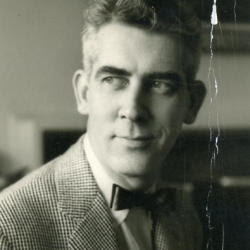
E.D.H. (Dudley) Johnson
 

*https://www.youtube.com/watch?v=WzmnSyqv37A


**Child of the Tropics (London : Collins : Harvill Press, 1980). The other two of her books to which I allude are How Charles Bravo Died: A Chronicle of a Cause Célèbre (London: Jarrolds, 1956) and Poison and Adelaide Bartlett: the Pimlico Poisoning Case (London: Hutchinson, 1962)


Wednesday, June 28, 2023

Martyrology


I thought I had quit worrying about our national political scene, but of course the worry is inescapable.  I have been wrong concerning almost everything to do with Donald Trump—and not just a little bit wrong, but sensationally so.  I was convinced that it was impossible for him to be elected in 2016.  I am convinced that he cannot be elected in 2024.  But then the sardonic aphorism of H. L. Mencken steals upon the mind: Nobody ever went broke underestimating the intelligence of the American people.”  Does it not  seem that a detailed and circumstantial criminal indictment, thus far answered only by petulance, might be a serious impediment?  As a result of a  trip to the library last week, I am worried.  For after a long hiatus occasioned mainly by the Covid situation, I have been able to return to spending a few hours now and then in the Firestone Library pursuing what I indulgently call research. 


I face two problems.  The first, not new but newly much more acute, is that most of the books I want to look at have been removed to a “remote storage” facility.  The paging service is fairly quick, but the system itself is still a grievous downgrade from the glory days when Firestone was truly “open stack.”  To fetch something from remote storage, you need already at least to suspect that the book is worth fetching.  No footnote, printed bibliography, or even book review can replace walking slowly down a range of books already carefully arranged for you by expert librarians by subject relevance.  It usually takes about ninety seconds of flipping through a book’s pages to know whether you want to spend time with it or not.  It takes a good deal more time than that to order unseen something that may well turn out to be useless to you.  This wastes your own time as well as that of circulation librarians and unseen book-fetchers.  The second difficulty might be described as the candy store problem.  It is that wandering up and down random stacks, one comes upon alluring random titles of a distracting character.  Thus, straying far from fifteenth-century France, I found myself in seventeenth-century England, where I chanced upon a seductive book by an erudite if somewhat eccentric historian glorying in the name of Esmé Wingfield-Stratford: King Charles the Martyr, 1643-1649. Its subject, obviously, was the period of the final years of King Charles I, decapitated under a parliamentary warrant of treason on January 30, 1649.  It’s a terrific book.


A once-popular comic history of England, 1066 and All That, summarizes the English Civil War of the seventeenth century as a central historical event “consisting in the utterly memorable Struggle between the Cavaliers (Wrong but Wromantic) and the Roundheads (Right but Repulsive).”  That is an amusing way of putting it at only the minor expense of trivializing a major episode in political and ecclesiastical history.  Wingfield-Stratford, while capable of the amusing aside, takes things more seriously.  The convincing paradox he advances is this: the vengeful Presbyterian parliamentarians in believing they were putting an end to the British monarchy were in fact guaranteeing its restoration.  Oliver Cromwell, aware of this danger, did all he could to prevent the execution; but he was outmanoeuvred and thus overpowered by the fanaticism of the radicals in Parliament.  That is the “take away” from Wingfield-Stratford’s book.

Historical parallels do exist, but some are more compelling than others.  The parallel martyrdoms of Charles Stuart and Donald Trump are far from exact.  Indeed, they are tenuous, but there are still enough similarities to disturb me.  King Charles was a pretty lousy monarch.  He was a poor administrator easily influenced by dubious lieutenants.  But he was an excellent martyr.  If he had put a high priority on self-preservation, he could certainly have avoided death.  The issue for which he went to the scaffold was the ecclesiastical governance of the national church.  The victorious Parliament demanded presbyterian governance in which the individual parish ministers had much power.  The King, by statute “head of the church”, insisted on the continuity of episcopacy, a church overseen by diocesan bishops.  It is true that these views were not without political implications.  Charles’s father, King James I, had succinctly opined, “No bishop, no king.” According to Malcolm’s famous line about the Thane of Cawdor in Macbeth, “Nothing in his life so became him as his manner of leaving it.”  This truly could be said of Charles.  His deportment in his imprisonment and on the scaffold was a testament to dignified courage.  It might erase in the popular mind the hauteur of several episodes of his reign.  In the wake of the king’s execution there appeared a book, the Eikon Basilike: the portraicture of His Sacred Majestie in his solitudes and sufferings.  It is presented as though the monarch’s own memoir of his imprisonment, and I see little reason to doubt that it is.  The title of the book is Greek for “the picture of the King.”  And the picture is that of an ethically noble, long-suffering, and very attractive man.  The book became an enduring best-seller, and reinforced at the popular level the idea that the man had been a saint.  It won for Charles in death a true popularity that had eluded him in life.  One might even say that martyrdom was his only possible route to reputational salvation.

It took only about a decade for monarchy to be restored in England.  When it was, terrible punishments were inflicted on some still-living signers of the King’s death warrant and unpleasant desecrations visited upon the interred remnants of the dead ones.  Severed heads decorated the palings of the Thames bridges.


I now come to the political parallel which, while hardly dramatic, does have me worried.  Mr. Trump, with lots of encouragement, is presenting himself as a martyr, victim of  a “witch-hunt” and selective prosecution.  Never mind that no martyr on the books has ever led so sybaritic, pampered, and self-indulgent a life.  Never mind that through the long months of Document Gate he was treated not with kid but gossamer gloves by government officials not generally conspicuous for their patient tolerance of illegality.  Unfortunately, there is enough of a revanchist tone to some of the left-wing gloating to allow those so inclined to doubt that the majesty of the rule of law is the actual animating passion of his adversaries.  And our politics du jour is that of the “so inclined”.  Dogmatic, abrasive, and (very often) ignorant certainty has replaced any pretense of civilly debating debatable matters.  Trump is not a martyr; he is a hoarder of impressive memorabilia who thinks that military secrets are "cool".  Those are two things more different than chalk and cheese.  Nor is he in any conceivable sense the paladin of any Christian cause, as he has claimed in a recent pronouncement that should be deeply offensive to all Christians—though alas probably won’t be.  But even the most tenuous parallels between 1649 and 2023 are worrisome to me.  The law of unforeseen and unintended consequences still operates, and usually malignly.


                 He nothing common did, or mean, Upon that memorable scene


*Esme Wingfield-Stratford, King Charles the Martyr, 1643-1649 (London : Hollis & Carter, 1950)