Wednesday, April 9, 2014

An Operatic Insight

Le cœur a ses raisons que la raison ne connaît pas.  Blaise Pascal 
That was the true Light, which lighteth every man that cometh into the world.  (John 1:9)


            For most of my adult life I have been conducting a search, so far in vain, for a satisfactory “convergence theory” true to my own life experience, in which things keep nearly coming together in tantalizing ways.  Lord knows the theories are there, though expressed by geniuses whose thought I can master only in small portions.  From Max Weber I grasp the historical determinism born of bureaucratic structures.  Arthur Koestler’s Roots of Coincidence, of which I have written before, suggestively hints at another kind of “sociological” explanation.  Actually, neither of them seems an unequivocal advance over Hamlet--
                        There's a divinity that shapes our ends,
                        Rough-hew them how we will—
not that I pretend to understand him entirely either.
            My good friend and fellow dawn swimmer T. K. Chu presented us with two tickets to a Westminster Choir College production of Tchaikovsky’s opera Iolanta, which we attended on Friday night.  T. K. had seen the Thursday performance and liked it so much that he got tickets for the next night as well.  But animated by habitual charity he offered them to me with the slightly cryptic comment that whereas most operas deal with the problems of immorality, this one deals with the problem of morality.
            I am no opera expert.  Not merely had I never seen Iolanta, I had never heard of it.  On the assumption that at least some of my readers might share my recent ignorance, I offer the following brief synopsis.  The opera is a charming medieval fairy tale, involving some historical personages of the fifteenth century, apparently re-invented by Peter Tchaikovsky’s brother, Modeste, after a play by the Danish poet Henrik Hertz (1845).  Iolanta (Yolande), the lovely daughter of King René of Provence, was born blind.  But her protective father has made extraordinary precautions to keep her from the knowledge of her blindness.  She lives in a kind of Bower of Bliss surrounded by cascades of flowers of floods of birdsong.  Though she suffers a vague sense of incompleteness, her relatives, keepers, and friends have expunged from their vocabularies all references to sight, light, color, and so forth.  A ferocious “Keep Out” sign threatens death to any intruders.


            Nonetheless intruders arrive.  One of them is the Burgundian knight Vaudémont (Frederick II of Lorraine).  He falls head over heels in reciprocated love with Iolanta, all the while unaware of her blindness.  Another is a Muslim physician, Ibn-Hakia, your updated Magus from the East, a man reputed capable of healing blindness—but only when the blind person really wants to see.  Thus is achieved the suturing of vision and love.  Naturally, complications occur.  René has already engaged his daughter to Somebody Else.  Somebody Else has meantime fallen in love with a female Somebody Else.  Vaudémont in a heroic attempt to do the Right Thing inadvertently introduces the concept of sight to Iolanta—so that both lovers simultaneously tumble to the reality of her blindness.  Vaudémont now falls beneath King René’s sentence of capital punishment.
            It may be a fairy-tale landscape, but quite serious moral and philosophical issues now strew its ground.  To understand this essay you must also know a couple of things about my current life circumstances.  I am in the midst of teaching an Evergreen Forum course on the materials of my most recent book—meaning, roughly, the occult dimension of the period of the Enlightenment.  Next, on the day before the opera I had undergone surgery to remove an occluding cataract from my right eye.  Hence my mind had naturally been much occupied with sight and insight, with the light and the dark, with blindness and vision, with what is readily manifest and what is occult.
            The relations among the five senses and their claims to philosophical priority were topics dear to the heart of such Enlightenment heavyweights as Condillac, Diderot, and Rousseau.  So Tchaikovsky’s opera presents us with some wonderful Enlightenment conundrums, just as life presents me personally with a no less riddling convergence.  It is indeed a story about Enlightenment
            One standard English translation of the opening sentence of Kant’s famous essay “What Is Enlightenment?” is this:  Enlightenment is man's emergence from his self-imposed nonage [Unmündigkeit].  “Nonage” is not a word in common use these days, and I don’t think we torture Kant’s sense if we think of a “self-imposed limitation of vision.”  When I was a child, I thought as a child…But whose fault is blindness?  Iolanta is laced with scriptural allusions that, I suspect, are unlikely to be noticed by today’s audience.  In particular King René in a very disturbed mood speculates that the cause of his daughter’s blindness is his own sin.  This is obviously taken from the episode of the man born blind in the ninth chapter of John’s gospel. “And his disciples asked him, saying, Master, who did sin, this man, or his parents, that he was born blind?”  Those who know the passage will know also the answer to the question: “Neither hath this man sinned, nor his parents; but that the works of God should be made manifest in him.”
            Tchaikovsky does not merely take up some choice themes of the Age of Reason; he also criticizes the tendency of some of the enlightened toward mechanistic materialism.  It was Pascal who had said "The heart has its reasons, of which reason knows nothing" and William Blake in his poem “Mock on, mock on, Voltaire, Rousseau” who made the claim that “…Newton's Particles of Light
are sands upon the Red Sea shore.”
            The choral resolution of Iolanta, like most choral resolutions, is something of a cliché.   What makes it a little unusual is that it is a religious cliché: God is light.  The classic statement is probably in the prologue to John’s gospel, taken thence into the Nicene Creed itself.  Tchaikovsky’s version in the final chorus is “Thou art the brilliant light of truth”*.  Even here there is unsettling convergence.  Earlier in the week the board of the Oxford University Press accepted a proposal for a book I had submitted.  Presuming that I now actually write it, this will be my first venture with this venerable and prolific press.

*Ty sveta istiny sijan'e  


Wednesday, April 2, 2014

A Memorable April Fish


The snipe (gallinago gallinago)

          Yesterday was April Fool’s Day, and I managed to get by it unscathed though probably not unscathing, to judge from the facial expressions of some of my poor students in the “Evergreen Forum” course.  But the turn of the calendrical leaf did bring to my mind, as it does each year, my own most memorable exposure as an April fool or rather an April fish.   That is the term used in Spain, borrowed I think from the French.

            In 1959 in the vacation between Hilary and Trinity terms—the British equivalent of collegiate “spring break”—I hitchhiked with my good buddy Bob Pearce from northwestern France to central Spain and back.  Bob was a working-class lad from Merseyside.  At Oxford he was reading Modern Languages, specializing in French and Spanish.  Spanish, though at that time rarely studied in England was the only foreign tongue I had had the chance to study in high school, and I could sort of get by in it.  But only sort of, as this tale will demonstrate.  Bob was quite proficient, and of course his Spanish was the real Iberian thing with its effete-sounding lisps.  I don’t know what became of Bob or where he is now.  At the Jesus College gaudy I attended last year no one had word of him.  One of the many follies of youth is the carelessness through which even vibrant friendships can lapse.

            We had little money but lots of youthful bravado.  Franco’s Spain was primitive, exotic, mysterious.  If you know only the contemporary scene of tapas bars and bibulous Brits you can have no idea.  There were not too many roads and not too many vehicles driving on them.  Hitch-hiking was not illegal—it seemed to be the chief mode of transport for army recruits and even some of the policemen with the huge guns and sinister tricorn hats—but people willing to pick up obvious foreigners like us were not numerous.  We had wonderful adventures, but we spent more than one night ride-less, sleeping in the open fields, still pretty chilly in early spring.

            Somewhere in the boondocks of central Spain, between Avila and Madrid, we got picked up by a couple of busloads of fascist boy scouts.  I speak in the most literal and technical sense.  This was a battalion of young, uniformed, male outdoorsmen belonging to the youth group originating in the old Falangist political party.  They were returning from a visit to the Valle de los Caídos, Franco's oddly Stalinesque monument to the dead of the Civil War.  There were several adults with them, including a priest and two young seminarians.  This priest, probably in his forties, was a man of parts.  He had had a parish in Cuba, and claimed to have made a dramatic “escape” only weeks earlier.  I had no idea then what he could be “escaping” from.  To members of my demographic Fidel Castro was a heroic figure pure and simple, not a religious persecutor, but I knew when to keep my mouth shut.
Valle de los Caídos

            The clerical gents invited us to go with them to their bivouac or campgrounds to spend a night or two, and we readily agreed,  As the bus chugged along, spewing great puffs of black smoke, there was much talk of a hunting expedition, as the season had just opened with the new month of April.  Would los ingléses like to participate?  The object of the chase would be the prized gambosino, a word unknown in my small Castilian vocabulary, but defined for me as something like a large, semi-avian, and particularly succulent conejo (rabbit).  It sounded like great fun, but there was one hitch.  Although gambosino season had indeed opened that very day, the head-man (jefe) of the campgrounds was opposed to gambosino hunting on principle, so that our activities would have to be conducted furtively.

            After nightfall eight whispering conspirators, including Bob and me, set off into the semi-desert terrain carrying stout walking staves and a couple of gunny sacks.  We could barely see anything.  Whenever a vehicle’s lights flashed on a distant road we were ordered to hide and dove headlong into the prickly bushes.  There were numerous alleged sightings of the gambosino, though none by me; there was lots of rushing hither and yon, and hoarse, whispered exclamations.  I could hear the hunters clomping about, and the thumping of staves.

            Eventually two guys arrived proudly holding up their gunny sacks, which I could dimly perceive now contained some large objects of substantial weight.  “We got two of them,” said one of the seminarians in a whisper-shout.   He was practically transported with satisfaction.  Dos gambosinos!
The gambosino (cuniculus spurius)

            They handled the next part brilliantly.  We all marched back exultantly to the rustic campgrounds dining building, apparently no longer in fear of the jefe, who of course was non-existent.  A glass of wine was poured for everybody, including the thirteen-year-olds.  We drank a sip or two.  Then with considerable ceremony the two seminarians emptied their gunny sacks.  Out came two small trussed up bedrolls.  It had been a classic snipe-hunt, and we were classic April fools—or rather April fish, pescados de abril.  The room exploded in laughter, good-natured but raucous.  Poor English Bob was mortified.  But even then I didn’t quite get it.  What I thought I shouted out was “I want to see the rabbits”.  But in my confusion I muddled the word for rabbit (conejo).  What I said was “I want to see the *cojones.”  Then they really laughed.


*cojones, testicles


Wednesday, March 26, 2014

New at Ole Miss


On Thursday of last week I was in Oxford, Mississippi, where I delivered a lecture in the English Department at the University of Mississippi (usually called “Ole Miss” by its students and alumni.)  It was also an occasion to visit with old student friends, now prominent members of the faculty.   The weather helped a lot.  I left Newark in freezing cold and returned to Newark in freezing cold.  In Mississippi I walked about in shirtsleeves and enjoyed the flowering trees and masses of bright daffodils.  I had been on the campus once before—I believe it must have been in 1956.  I recognized a few campus landmarks, but the overwhelming sense was of a new age and a new creation.

            Growing up in Arkansas we used to say, jokingly, “Thank God for Mississippi!”  That was because in the statistical tables of shame documenting the scourges of poverty, illiteracy, illegitimacy, ringworm, and so forth, Arkansas was only forty-seventh out of forty-eight.  Mississippi also bore the special opprobrium of its appalling racial injustices.  I doubt that the situation in Mississippi was in fact worse than in most other parts of the rural Deep South, but such grotesque episodes as the murders of fourteen-year-old Emmett Till (1955) and of the civil rights activists James Chaney, Andrew Goodman, and Michael Schwerner (1964) have created an especially permanent stain.

            There were no black students at Ole Miss at the time of my first visit.  The first black student to matriculate there was a courageous and consequential contrarian named James Meredith, who in 1963 essentially forced the Kennedy Administration to put its money where its mouth was and back his right to admission with its coercive powers.  In 1963 Meredith was execrated by all the elites in the State of Mississippi.  Today those same elites have honored him with an imposing statue on the Old Miss campus.  That monument offers at least the pretext for this essay.

            America confronts serious racial problems, and racial prejudice has by no means disappeared.  It may never disappear until virtue and wisdom can be made universal by genetic modification.  But legal racial discrimination against people of color, and racial discrimination that enjoys broad social support, is a thing of the past.  In the politically correct context of most of our institutions of higher education it is not particularly popular to comment on the most extraordinary amelioration of our democracy to be achieved in the past century.  It is, however, very dramatic.  I was alive and sentient at the time the Supreme Court ruled in the case of Brown versus Board of Education (1952), and I followed the drama of the integration of Central High School in Little Rock (1957).  Southerners of my generation have witnessed a true social revolution.

            This brings me back to the statue of James Meredith, and to a recent nasty incident that in a counter-intuitive way can demonstrate my claim.  Few people have expressed dissatisfaction with the statue except for James Meredith himself, who has opined that it violates the second of the Ten Commandments.  (I think I mentioned that Meredith is a contrarian?)  But recently someone vandalized the statue in a particularly disgusting way—by placing a noose around its neck and decking it out with an old Georgia state flag that included the motif of the Confederate battle flag.  There is nothing even vaguely amusing in hints of racial lynching, and the student protests inspired by the episode were as appropriate as they were predictable.  What is more interesting to me from the historical point of view was the reaction of various power centers in Mississippi.

            Remember that in 1963 the governor of the state publicly threatened to use the state police to keep Meredith off the campus.  Attorney General Robert Kennedy actually did mobilize five hundred federal marshals to counter that threat.  In 2014 everybody of any consequence in Mississippi condemned the vandalism in the strongest possible terms.    The senior administrators of the university began a vigorous investigation.  The investigation was considerable aided by the Alumni Association, which offered a $25,000 reward for the identification and criminal prosecution of those responsible.  The Inter-Fraternity Council, or whatever it is called at Ole Miss, made the pre-emptive strike of announcing that should any culprit turn out to be a fraternity member, that person would immediately be expelled from his fraternity.  Strong suspicion soon fell on some callow underclassmen—all of them from Georgia, as the campus press was quick to point out.  Thank God for Georgia!  On the basis of mere suspicion alone a national fraternity suspended the Ole Miss chapter with which the suspects were associated.

            The episode is apparently still sub judice, and I know nothing more than what I picked up from the campus buzz and from a segment on NPR.  Nor do I know what is on the mind of people who would put a noose around a statue, but I suspect it is more likely to be a compound of alcohol fumes and appalling cultural ignorance than coherent racism.  Of course an unpleasant comeuppance is justly upcoming.  But a repellent social aberration universally condemned is not the same thing as a widely accepted social norm, and that’s a consequential difference.  This disgusting episode does not presage the return of Percy Grimm.

            Don’t let that obscure allusion annoy you.  It seems appropriate, perhaps inevitable, since one high point of my visit was a personal tour of Rowan Oak, William Faulkner’s house, conducted by Professor Jay Watson, an eminent Faulkner scholar, who generously shared an hour’s worth of his amazing knowledge of the architectural and cultural history of the South in relation to sometimes arcane aspects of the textual history of Faulkner’s writing.  I am no Faulkner scholar, but reading Absalom!  Absalom! and Light in August was one of the experiences that set me toward a life of literary study.

            When I got home I searched out Faulkner’s justly famous Nobel Prize acceptance speech of 1950.  It is grounded in the general gloom and doom of the early Cold War, which it seeks to confront with the “eternal verities” of the human spirit.  “I believe that man will not merely endure,” Faulkner said; “he will prevail. He is immortal, not because he alone among creatures has an inexhaustible voice, but because he has a soul, a spirit capable of compassion and sacrifice and endurance.”

Wednesday, March 19, 2014

Readers or Viewers


Recently I read somewhere an interesting article about readers and non-readers.  The distinction was not between literates and illiterates—that is, between people capable or incapable of reading—but between those who do and those who don’t read books. 

            Of the latter  (“non-readers”) there was what was for me a surprisingly large number, and it was growing.  There are quite a few people who do not read a single book in a year, and some who do not read a book for years on end.  The non-readers tend to watch videos and stuff.   I hope that I myself am living proof that it is possible both to read books and to watch videos and stuff.  The author’s focus was the possible correlation of reading books with social class.  Sociology can be full of surprises, but not this time.  People who read books are on the whole better educated, more financially secure, and of “higher status” than those who do not.  The issue of relating correlation and causation, which is always vexing in such “studies,” was probably insuperable here, and I don’t believe it was touched upon.   But it does seem to me intuitively correct, not to say obvious, that people who are better off materially are likely also to be better in that all-important branch of spiritual life that is the fruit of serious, habitual reading.

            Something interesting happened, though, when I decided that I would like to revisit the article preparatory to writing a blog essay of my own.  I could not find it.  I could not in the first place remember whether I had read it in print or on-line.  When I Binged it—and I consider Binging of higher social status than Googling—I found dozens if not hundreds of items so similar that I was unable to identify the particular piece.  The irony did not escape me: I was foiled in my research into changing reading habits by my changed reading habits.

            These findings would discourage me, did they not contradict others in which I have more confidence—those of my own Subway Test.  (The test actually includes buses as well, though trains and planes require a special metric.)  Unusual personal circumstances determined that I became familiar with the London Underground and the Paris Métro well before I knew much about the New York Subway.  When my children moved to New York, however, which was quite a while ago now, I became an occasional subterranean traveler myself.  What I noticed early on was that in London about one in three straphangers would be reading a book—usually a distinctive orange and white Penguin paperback, suggesting intellectual quality.  London r[ea/i]ders are not merely numerous but above average in erudition.   (I once sat next to someone reading the Elementary Turkish Grammar edited by my friend and colleague Norman Itzkowitz.  It was all I could do to restrain myself from telling the guy, but it was way too unBritish.)  In Paris there would be a couple of readers in any half-full car, and everybody knows that all French books ooze intellectuality.  In New York the subway reader was much rarer.           
           
            Things could be worse, mind you.  My experience with public buses in Italy, although limited, has left me with the firm opinion that Italian bus-riders are not book readers.  I only ever saw one reader reading one book: Sesso nel confessionale.  This was a scandalous book of the moment, written by a blasphemous journalist who went around various churches making inventive confessions of imaginary sexual sins and then reporting the wildly differing penances imposed.  If you think our drug laws are incoherent….but I digress.

            Over the past couple of decades the evidence for American literacy has been, let us say, ambiguous.  If I judge things from the perspective of my royalty statements, there is little room for hope.  On the other hand, when I judge by the Subway Test, books seem to be making a strong comeback.  One sees quite a few book-readers, especially if you take an optimistic attitude to riders holding electronic tablets.  Most other people are reading something on their tiny telephone screens.  Almost everybody under sixty is sporting ear buds, and it is at least remotelyi possible that the guy with the closed eyes and the rhythmically nodding head is grocking on Jane Austen on Audible rather than Chet Atkins on acoustic guitar.

            Indeed I am beginning to believe that the much-maligned hand-held device may prove a stimulus to authors of serious books.  At the moment e-book publishers are trying hard to make the pixiled page look ever more like the printed one, but that may change.  My brainy granddaughter Sophia, who is studying brain science with other brainiacs at Johns Hopkins, just introduced me to what may be the Next Big Thing in readings: Spritzing.  If you check it out you will immediately grasp both the potential and the infuriation.  You will probably also agree that although people occasionally survive simultaneous texting and driving, things are unlikely to work out so well with Spritzing.


Wednesday, March 12, 2014

Lady Anne Finds Her Match


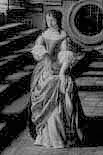
Lady Anne Conway, about 1660, a detail from the domestic portrait by Samuel van Hoogstraaten

I suppose that most scholars of literature, and many historians, have shared a disconcerting realization of the large spiritual gap separating them from the objects of their study and admiration.  How can anybody write about Shakespeare, for example, without feelings either of inadequacy or of fraud?  How could any academic essay on King Lear actually enlarge King Lear?  I spent a lot of time teaching Chaucer to undergraduates, and writing about him for the scholarly press without ever getting in hailing distance of the man’s geniality or the scope of his genius.  Just very occasionally, however, one encounters something approaching a just symbiosis of the writer and the object of the writing—in Einhard’s Life of Charlemagne, perhaps, or in the fourth gospel.

            When I was writing my most recent book I encountered a fine example of this happy phenomenon relating to Valentine Greatrakes, the “Stroker”, a faith healer who baffled some of the great minds of the early Enlightenment in England.  It was then that there came into my hands a big octavo entitled Conway Letters: the Correspondence of Anne, Vicountess Conway, Henry More, and Their Friends, 1642-1684, edited by Marjorie Hope Nicolson (New Haven, 1930).*

            Anne Finch, the daughter of Sir Heneage Finch, who for a time in the reign of Charles I was the Speaker of the House of Commons, was born in 1631.  At the age of twenty she married Edward Conway, later Earl of Conway, the heir to an imposing country house, Ragley, in Warwickshire.  From the intellectual point of view Lord and Lady Conway were one of the premier power couples of her age, or any other I suspect.  Lord Conway amassed at Ragley an imposing scholarly library.  It was still a time when a voracious scholar could hope to be familiar with almost every important book issuing from the press, and his book agents scoured the bookshops of the Continent for new works in every field of learning.

            Yet in this close and loving marriage the distaff was mightier than the spade.  At a time when women were subordinated in all walks of life, excluded from the universities and the professions, disabled by custom and by law, Anne Conway has to be reckoned one of the great intellectuals of her day.  Latin, Greek, and Hebrew she mastered at a high level.  Wholly on the basis of recognized ability she was accepted as a private pupil by Henry More , the Cambridge Platonist, who judged her the ablest interpreter of the philosophy of Descartes he had ever met.  More and other famous scholars and philosophers like Ralph Cudworth made of the Ragley dining room a kind of running salon of virtuosity.

            Many of the familiar letters that passed among this elite group were used by their less impressive posterity to kindle fires or polish furniture!  By extraordinary good fortune, however, a substantial number  were preserved in a great wooden chest, eventually falling into the rescuing hands of Horace Walpole, a man who knew a thing or two about letter-writing and the value of letters.

            Only in the twentieth century, however, did they get their due when Marjorie Hope Nicolson took them up as a scholarly project.  In Professor Nicolson Lady Anne Conway found her match, or at least her modern analogue.  Nicolson (1894-1981) was a brilliant scholar of seventeenth- and eighteenth-century English literature who, like Conway, was a bold pioneer in what in the upper echelons of American higher education was still pretty much a man’s world.   Her list of “first woman to…” is impressive.  She was the first woman to take a doctoral degree in literature at Yale—which she did in two years--the first woman to teach on the graduate faculty of an Ivy League institution (Columbia), the first woman President of Phi Beta Kappa, the first woman president of the Modern Language Association.  She declined the invitation to become the first woman president of Smith, where she had served as a distinguished professor and dean.
Marjorie Hope Nicolson in 1930, when she published the Conway Letters

            Her scholarship, too, was pioneering, and revolutionary.  She had a rigorous philosophical mind and a deep knowledge of the history of science.  She was thus perfectly prepared to undertake investigations of the extraordinary impact on the literary imagination of the scientific explosion of the seventeenth century and the later Enlightenment.  There are not a great many books that I myself remember vividly from graduate school in the early sixties, but two of them were by Nicolson: Newton Demands the Muse: Newton’s Opticks and the Eighteenth Century Poets and Science and Imagination.  I met her once, in 1961.  She gave a lecture at Princeton, an institution at which there was not then a single woman student or faculty member.  Yet I remember that one of my heroes, the genial Louis Landa, no slouch of a scholar himself, introduced her as the greatest of living American literary scholars.

            The Conway Letters naturally have of themselves the fascination of bringing to life the rather amazing life and thought of a unique community of English aristocratic and philosophical thinkers three centuries and more ago.  But their organization, edition, and introduction by a modern scholar who lived and breathed the seventeenth century and who wrote with the sparkle of a wizard and the clarity of an angel makes of them something of a modern masterpiece as well.  I think Lady Anne would be most pleased.

*Oxford brought out a renewed edition in 1992.


Wednesday, March 5, 2014

Democracy Downgrade?


Yesterday was slightly exceptional in that I managed to embarrass myself twice before the light of dawn.  I did not begin the day by contemplating something true or beautiful.  Instead I made a bee-line for my computer to seek out the Bank of America website to find out whether my monthly pension check had yet been deposited.  That was embarrassment number one.  Embarrassment number two was the quite real sense of annoyance, indeed grievance, that descended upon me when I discovered that in fact the deposit had not yet been made.

            In it inevitable that the aging process should be accompanied by a certain shortening of horizons, but surely those should be of the flesh, not of the spirit.  As a youngster I was aware of several local “seniors”—not my relatives, I hasten to add-- whose only visible occupation was awaiting their “government check,” as it was called.  How pathetic is that?  But at least they actually needed the money.  Without it they could not get the pickup fixed or renew the supply of Red Man indispensable for keeping their teeth and beard stubble at the proper level of disgustingness.  We are not exactly rolling in dough, but surely we have sufficient resources for a comfortable life without worrying about the months with thirty-one days.

            And I am not awaiting a government check, but a private sector annuity.  I tend not even to think about Social Security payments, which barely cover our property taxes.  But that hasn’t kept me from developing my own incipient case of entitlementitis.   The moment of discouraging self-awareness coincides with our reading of a particularly excellent article in the current issue of The Economist.  Its title is “What’s Gone Wrong with Democracy?”  I commend this essay to all thoughtful citizens.


            I see now that my own analysis of the current American malaise, which I tend to attribute to an obsolescent Constitution, is rather parochial.  This Economist essay taking a broader view, argues that it is world-wide democracy—of which our country is to be sure both the natural and the nominal leader—that is sickly.  It identifies the two precipitating causes of democracy’s malaise in our new century as the financial crisis of 2007-2008 and the rise of China. 

            “The Chinese Communist Party has broken the democratic world’s monopoly on economic progress.”  The failure of classic twentieth-century Communism was economic.  It didn’t work.  But China has shed the economic essence of Communism while keeping its authoritarian and anti-democratic politics, yet simultaneously achieving dramatic economic growth and expanding GNP.  In a world in which village pragmatists considerably outnumber political philosophers it is not clear that the American “democratic model” can claim the advantage of superior practical results.  “China says its model is more efficient than democracy and less susceptible to gridlock.”

            If the essay’s most arresting ideas are those relating to China, it is the discussion of the world-wide financial crisis that is most relevant to my own current mood.  I lived most of my formative youth in a fear of debt that was sort of like the fear of polio.  I didn’t know exactly what it was, but I knew that you absolutely had to avoid it.  Of course I eventually grew up and learned that the way that even some quite sober citizens got their cars and houses and stuff was by buying them with money they didn’t actually have at the moment.  Embracing debt, indeed, seemed to be the essence of “the American way of life” and the necessary path to achievement of “the American dream”.  I eventually got with the program, but always nervously and with as little enthusiasm as was consistent with traveling on an American passport.

            So I thought I understood the financial crisis, sort of—vast numbers of people with huge housing debt and less housing equity, mighty financial institutions coming to me—moi!--rattling their tin cups, that sort of thing.  But here in this Economist article I read what I actually have believed all along: “The financial crisis has starkly exposed the unsustainability of debt-financed democracy.”  It may have exposed it, but so what?  The distinction between democracy and demagoguery is no wide gulf, perhaps nothing more than a lexical finesse.  Political pandering is necessarily a universal temptation of all democratic systems, but American constitutional democracy has developed in such a way as to make of it a controlling principle. 

            It is perhaps unfair that American Congress has apparently reached its nadir of public approval, since we have the Congress we want.  That is what “popularly elected” has to mean, isn’t it?  There is an effective symbiosis between an electorate that demands things it does not want to pay for and elected representatives who can wangle the short-means terms on which they can have them.   Or some of them—and not always the right ones.

            The Economist essay is by no means all doom and gloom.  There is an upbeat final section entitled “Getting Democracy Right.”  Here we find many sensible suggestions and at least plausible paths of reform.  Maybe it is merely my exhaustion before this grinding winter--or the fact that today is Ash Wednesday--that makes me find the gloom and doom part more convincing.

Wednesday, February 26, 2014

Famous Writers I Have Known


 Famous writer James Magnuson, author of Famous Writers I Have Known

From what you read in the papers you might reasonably conclude that the public considers the chief missions of the modern university to be the political corruption of American youth and the financial ruin of their parents.  This blog eschews controversial topics, and I want to stress instead a very positive role played by our institutions of higher education that is perhaps not always sufficiently appreciated: their role as patrons of the arts.  The number of writers, musicians, dramatists, and visual artists who find on our college campuses a professional niche and at least some degree of financial support is very large.  Their contributions to our national cultural capital have been enormous.

            That paragraph is obviously an introduction, but, you might ask, an introduction to what?  Well, to what else than a semi-review of and unembarrassed sales pitch for Famous Writers I Have Known, the latest novel by James Magnuson, the Director of the Mitchener Center for Writers at the University of Texas.  This hilarious romp of a book not merely exemplifies my general principle but takes it up as subject matter.

            The famous writers I myself have known at my institution include Toni Morrison, who was my colleague at the time she won the Nobel Prize for Literature, and Joyce Carol Oates, a colleague who publishes three-hundred-page books at approximately the same rate I publish blog essays.  But the first famous writer I ever knew at Princeton was Jim Magnuson.    Jim and I have been good friends for nearly fifty years, and you may remember his name from previous essays over the years.  Back at the beginning, in the late sixties, Jim was a Hodder Fellow and “playwright in residence” in Wilson College, a quasi-anarchist undergraduate residential college of which I was the alleged master.  Bliss was it in that dawn to be alive, but to be young was very heaven.

            Magnuson’s Famous Writers I Have Known is equal parts crime caper and literary satire.  Advice to young writers usually includes the suggestion that they choose a subject they know something about.  Magnuson is the long-time Director of a prestigious program for writers at the University of Texas in Austin.  The setting for this novel is a prestigious program for writers at a Texas university in someplace rather like Austin.  By no means do I suggest that the novel is “autobiographical”; but I can say that the reader is likely to find the handling of setting highly convincing.

            The “situation” in Famous Writers, which is at least as plausible as that in Sir Gawain and the Green Knight, is as follows.  There is a famous writer who, since publishing a single sensationally successful novel long ago, has lived in almost supernatural obscurity for decades.  (Think, perhaps, for purposes of analogy, of J. D. Salinger circa 1980.)  This man is invited, on a nearly clandestine basis that defers to his mania for privacy, to be a well-paid writer in residence for a term at the Texas writing program.   However, the invitation is intercepted, so to speak, by a New York confidence man of bounteous intellectual invention but limited literary vocabulary.  This man, Frankie Abandonato, the novel’s narrator, has very good reason to want to hide out in the obscurity of an academic institution, since he is on the lam.  The very essence of the criminal cunning of the con man is to seize and exploit fortuitous opportunity, and Frankie somewhat rashly sets out to exploit this one.  He thinks that masquerading as a famous writer need be no more taxing than some of his other charades as a criminal trickster.

            There is both satisfying mystery and teasing suspense in Magnuson’s novel, so I shall say no more, except that the plot is as carefully handled at that of a Stoppard play, and that letters go astray even less frequently than they do in Thomas Hardy.

            Magnuson makes a few gestures to satisfy the stray artsy reader for whom no novel can pass muster without at least a few “themes” and “symbols” and if possible “symbolic themes”.  One good example of Magnusonian wit is to be found in the anti-hero’s name: Abandonato.  In addition to satisfying the requirements of criminal ethnic stereotype, it fits in with the recurrent and quite serious themes of parental abandonment and orphanhood.  (One of Magnuson’s earlier novels, Orphan Train, required him to research in some depth the history of the treatment of orphans in this country.)

            But what makes Famous Writers an engaging comic novel is what will probably be called its “academic satire”.  It is Magnuson’s inside knowledge of academic writing programs that is the book’s greatest structural strength.  He knows how fruitful such programs can be, and how richly they contribute to the American literary scene.  But he also has a lively eye for potential absurdities.  Pretense is not exactly the same thing as pretentiousness, but the two are pretty close together in the dictionary.  At least Frankie Abandonato knows that he is a pretend writer.